

























































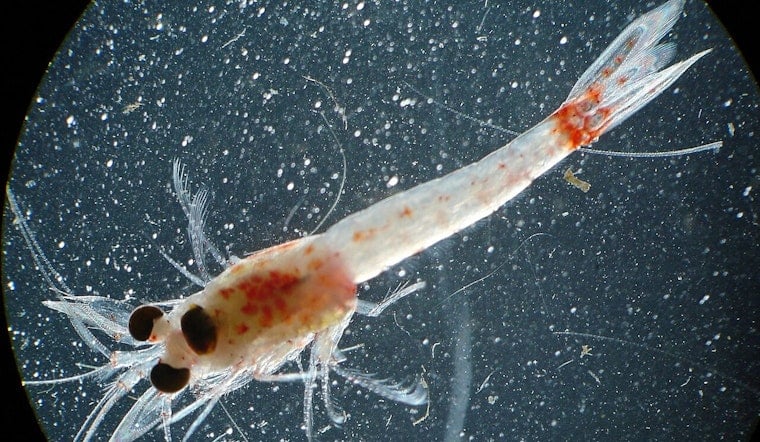
The last Great Lake to dodge the bloody red shrimp just lost its clean record. Scientists say the invasive crustacean has now set up a reproducing population in Lake Superior’s Duluth‑Superior harbor, after researchers pulled adults, juveniles and pregnant females from night‑time traps and nets. That mix of life stages points to a self‑sustaining colony and has local biologists nervously eyeing nearshore food webs while urging boaters not to give the shrimp a free ride to other lakes.
Study confirms establishment in Duluth‑Superior harbor
During 2025 field work, researchers collected 81 bloody red shrimp using light traps and nets at Wisconsin Point and the Montreal Pier. The catch included multiple life stages that are typical of an established population. A study in the Journal of Great Lakes Research reports that the presence of juveniles and gravid females indicates the species is now reproducing in the harbor.
How they were found and what researchers are saying
University of Minnesota‑Duluth biologist Donn Branstrator said his team used night‑time light traps because the shrimp tuck themselves into breakwall crevices during the day and are easy to miss. In an interview with Wisconsin Public Radio, Branstrator said, "It is there, in perpetuity one would think, if they can continue to grow and reproduce," while co‑author Matthew TenEyck cautioned that the longer‑term ecological effects are still uncertain.
What the shrimp eat and why it matters
Juvenile bloody red shrimp feed more heavily on algae, then shift toward zooplankton as adults. That diet puts them in direct competition with small fish and other plankton feeders that already rely on the same food. The Minnesota Department of Natural Resources notes that the shrimp can form dense swarms near piers and breakwaters, and a review in the Journal of Great Lakes Research points to European cases where Hemimysis invasions were followed by sharp drops in native zooplankton.
How they likely arrived and the invasion history
Scientists say Hemimysis anomala most likely reached the Great Lakes in ballast water from oceangoing vessels, then moved from one basin to another in the ballast of internal ships. The U.S. Fish and Wildlife Service reports that a lone specimen was first detected in the Duluth‑Superior harbor in 2017, according to the U.S. Fish and Wildlife Service, and the USGS GLANSIS database confirms later low‑density records in the harbor and nearby waters.
What officials and researchers want boaters to do
State agencies are pressing boaters to stick to the "Clean, Drain, Dispose, Dry" routine outlined by the Minnesota Department of Natural Resources, and to avoid moving bait, bilge water or live‑well water from one lake to another. At the same time, the Lake Superior Research Institute's Great Waters Research Collaborative is testing ballast‑water treatment and monitoring methods to cut the odds that additional invasive species will ride in on ships, according to the Lake Superior Research Institute.
Branstrator told Wisconsin Public Radio that his team has expanded sampling in 2026 across the Duluth‑Superior harbor and out to Two Harbors to map where the shrimp are turning up. For now, researchers say the priority is careful monitoring and early detection so managers can spot any warning signs of ecological change before problems ripple through nearshore food webs.



