

























































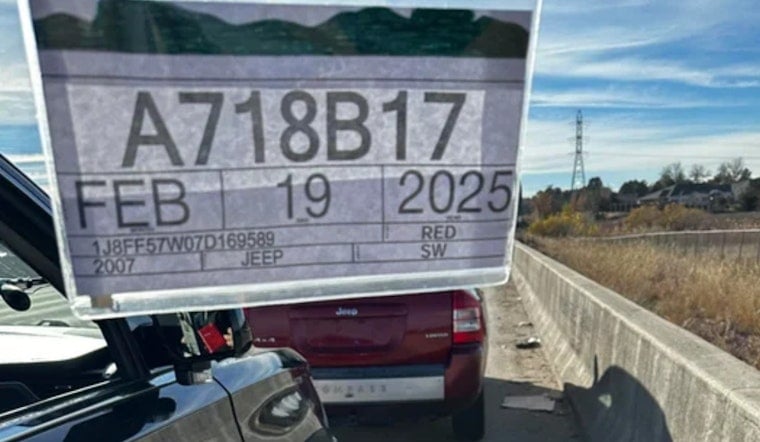
The Colorado Division of Motor Vehicles’ Motor Vehicle Investigation Unit has issued an urgent statewide warning after investigators uncovered a spike in counterfeit temporary license plates being sold online. Drivers who buy or display these so-called “print-at-home” tags risk having their vehicles seized, facing hefty fines, and potentially ending up with criminal charges.
In a statement to CBS Colorado, MVIU Agent in Charge Darin Icardi said investigators are seeing more people “attempt to bypass the law by printing their own plates or buying them from an unauthorized third party.” He noted that while some drivers think they are saving money and dodging fees, “the reality is that the legal costs will catch up to you,” adding that teams are actively working to identify and shut down websites that sell illegal tags.
According to the DMV, the only legitimate sources for temporary tags are local county motor vehicle offices or licensed, authorized automobile dealerships at the time of purchase. Using these official channels ensures a vehicle is entered into the state’s motor vehicle database and properly insured, per the Colorado DMV.
How the Scam Works and Why It Is Risky
State investigators say scammers are peddling cheap “print-at-home” temporary tags on social media platforms and classified sites, promising a quick shortcut that skips registration and taxes, as reported by CBS Colorado. Because these tags are not connected to the state’s registration database, drivers can end up unknowingly driving uninsured or getting stuck with unpaid tolls and tickets tied to the bogus plate.
Similar black-market operations have popped up in other regions. Federal prosecutors say a recent “ghost-tag” operation sold hundreds of thousands of counterfeit items and left millions in unpaid tolls and fines, underscoring how far the problem reaches across state lines. The Yonkers ghost-tag crew case in New York involved sham dealerships and federal wire-fraud charges, as per Hoodline.
What Colorado Drivers Should Do
If you recently bought a temporary tag from an online seller or spotted a listing that seems sketchy, officials say you should remove that tag and verify your vehicle’s registration status with your county motor vehicle office. The DMV advises keeping all receipts and messages from the seller as evidence and reporting suspicious sellers to county officials or law enforcement. You can find local office locations on the Colorado DMV site.
Legal Consequences
Under Colorado law, knowingly displaying or possessing a fictitious registration plate is a criminal offense. C.R.S. 42-3-121 treats the knowing display or possession of a bogus plate as a class 2 misdemeanor that can bring fines, possible jail time, and potential restitution, according to summaries of the code on FindLaw. The DMV says investigators are pursuing criminal prosecutions against those who sell or produce counterfeit tags and warns buyers that using a fake tag can result in vehicle seizure and a mandatory court date.
To stay clear of trouble, officials say drivers should stick with official registration channels, ignore too-good-to-be-true offers for temporary plates online, and report any suspected fraud to local law enforcement and their county clerk. Reporting suspicious ads, they add, helps investigators build stronger cases and take down the websites fueling the counterfeit tag trade.





