

























































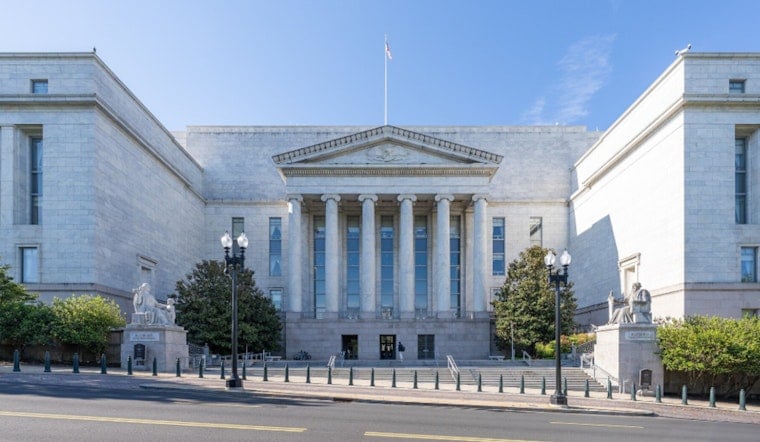
The House of Representatives’ biggest workhorse building is in rough shape, and the repair bill could be staggering. Lawmakers were told this week that the Rayburn House Office Building, a 2.4 million square foot complex sitting directly across from the U.S. Capitol, may need a near total overhaul that could approach $9 billion and stretch beyond a decade. That blunt warning has kicked off a scramble over money, logistics and one very basic question: where to stash hundreds of lawmakers and staff while the place is torn apart.
In prepared testimony to House appropriators, Architect of the Capitol Thomas Austin said his office is requesting $1.6 billion for fiscal 2027 to develop designs and evaluate swing space options, and he warned that Rayburn now faces the risk of “catastrophic system failure.” According to the AOC’s written testimony, that money would cover pre design, engineering and planning for a full modernization, plus the early work of figuring out where members and staff would actually work during construction. Reporting on the same hearing has also highlighted the AOC’s estimate that a comprehensive overhaul could approach $9 billion and play out over many years.
Austin did not sugarcoat the current situation. “I am most concerned with the level of risk of a catastrophic system failure in Rayburn in its current state,” he wrote, citing frequent elevator and escalator outages, major mechanical failures and “dozens of water intrusions” in the past year that have forced emergency repairs. The testimony says those incidents have triggered hazardous material abatement and pushed member offices and staff out of their spaces. Rayburn’s mix of hearing rooms, secure information facilities, a police firing range and other specialized spaces, along with lingering hazards from its construction era, would make a simple wing by wing repair job nearly impossible, according to the AOC testimony and reporting from Roll Call.
Why the Price Tag Is So Large
Size is a big part of the problem. Rayburn covers nearly 2.4 million square feet and is bounded by Independence Avenue, First Street and South Capitol Street, which means the systems that keep one office running are often tied into systems that serve many others. That web of connections makes large scale replacements and upgrades harder to pull off without major disruption. The Architect’s office has said a full modernization could require 15 to 20 years of phased work and extensive planning for swing space, a timeline that helps explain why the estimate has landed in the billions and would represent the largest project in AOC history, far outstripping recent campus overhauls, according to the AOC testimony and coverage from Punchbowl News and other outlets.
Money, Politics and the Swing Space Fight
Even with the dire warnings, appropriators have been in no rush to hand over the full ask. A draft fiscal 2027 Legislative Branch spending bill approved by House appropriators set aside roughly $689 million for the AOC, well below the $1.6 billion Austin requested for major initiatives. Roll Call reports that lawmakers in both parties want more documentation and tighter cost controls after the Cannon House Office Building renewal came in about $200 million over its original estimate.
The AOC has argued for building a new permanent swing space facility instead of trying to jam the House into repurposed nearby buildings, a preference that would itself cost serious money up front. Some members are openly skeptical and say they are not ready to commit to that kind of construction without firmer guarantees on cost and schedule, according to coverage of the hearings.
What Happens Next
For now, the Architect of the Capitol will keep pushing ahead with pre design work and pressing appropriators for the planning dollars needed to map out the full modernization and the swing space plan. House committees will spend the coming months arguing over how much to put on the table this year and whether to greenlight any early swing space construction.
Members ultimately face an uncomfortable choice. They can sign on to a massive, long running project that aims to fix Rayburn for decades, with all the disruption that implies, or they can keep authorizing smaller emergency repairs that pile up over time. Either way, the decision will ripple through members’ schedules, committee calendars and the broader Capitol campus budget for years to come.




_(55255174942).jpg)