

























































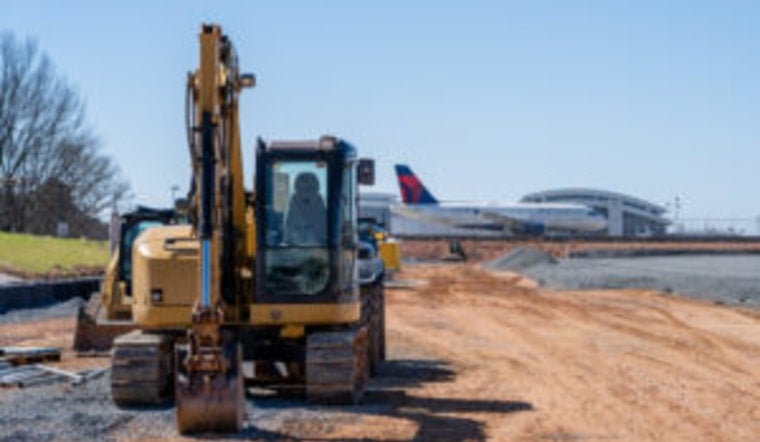
Raleigh-Durham International Airport is turning its biggest parking expansion into a stormwater science project. As the Park Economy 3 lot nears completion, the surface buildout is expected to reach nearly 11,000 spaces across about 110 acres. Tucked into that spread are seven experimental submerged gravel wetlands meant to catch runoff that would otherwise head toward Crabtree Creek. Regulators have signed off on the setup as a pilot, and university researchers will be watching closely to see whether the basins actually cut pollution once the lot is in full use.
What's being built
According to Raleigh-Durham International Airport, construction on the Park Economy 3 expansion is well underway and the program bundles parking with several sustainability features. The project includes solar canopies stretched over portions of the lot, electric vehicle chargers and a suite of new stormwater basins.
RDU reports that the first two submerged gravel wetlands are already planted. In total, the airport is installing seven basins that will range from roughly a quarter-acre to about a full acre in size. Each one will be fenced and set apart from the pavement so it can intercept the initial pulses of runoff coming off the lot instead of letting that water head straight toward nearby waterways.
Where the idea came from
The submerged gravel wetland approach traces back to research at the University of New Hampshire and has been used widely across New England, according to design guidance from the UNH Stormwater Center. Rather than a standard stormwater pond, the system spreads water across a planted sandy surface, then sends it down through a deep bed of gravel.
Inside that gravel, plant roots and microbes get to work. As water moves through, they help break down oil, trap sediment and strip out nutrients before the cleaned-up flow discharges toward nearby streams. On paper, it is a compact way to squeeze more treatment into a limited footprint, which is exactly the kind of constraint you find around a busy airport.
How the wetlands treat water
RDU's planning materials show that the basins are designed to grab what engineers call the "first inch" of runoff from storms, the dirtiest portion that typically carries most of the pollution. The team is finalizing details to treat up to two inches of rainfall over a 24-hour period, according to RDU project documents.
Those same engineering estimates sketch out what the system could achieve if everything performs as intended. In many modeled scenarios, the wetlands cut total nitrogen by roughly 25 to 54 percent and total phosphorus by about 40 to 66 percent. How close reality comes to those numbers will depend on the size of each basin, the plant mix and how quickly solids build up inside the gravel media.
Concerns and oversight
Not everyone is sold on the idea that these wetlands will be enough to protect downstream waters. Jean Spooner of the Umstead Coalition told The News & Observer that construction runoff had already carved gullies and delivered sediment into Lake Crabtree, and she remains skeptical that the system will meaningfully reduce nitrogen.
Day-to-day tracking of how the basins perform will fall to N.C. State researchers. Bill Hunt told the paper that the system "just passes the big storms safely without causing erosion," underscoring that the design is meant to handle both routine runoff and larger events without blowing out channels downstream. NCSU graduate student Anna Dias will collect water samples and log sensor data through the summer of 2027, building the dataset regulators will ultimately be looking at.
Why this matters
If the monitoring shows consistent reductions in pollutants, regulators could clear this gravel wetland approach for wider use, with RDU's installation serving as a model for other large paved sites across North Carolina. The engineering team and partners also point to a package of co-benefits. The expansion pairs stormwater controls with solar canopies and planned EV chargers, a combination that they argue nudges the project toward a lower overall environmental footprint, according to RS&H.
The next 12 to 18 months of data will reveal whether the submerged gravel wetlands deliver on that promise. For neighbors keeping an eye on Crabtree Creek, the verdict will come from lab results and sensor readouts rather than glossy engineering renderings.





