

























































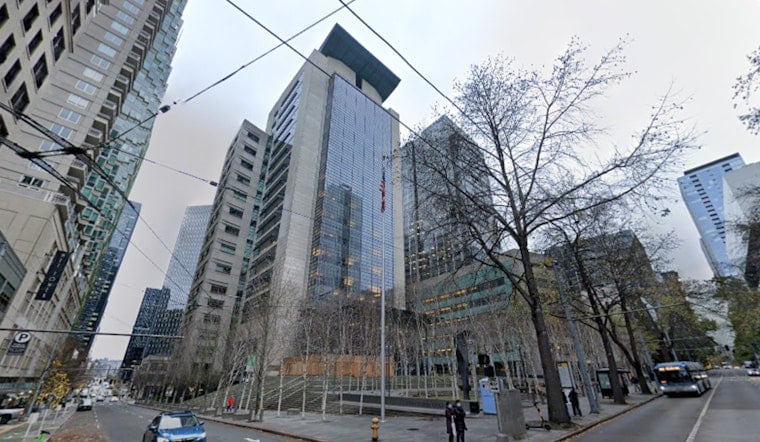
Manuel Garcia Hernandez, a 41-year-old Renton resident who once ran a local construction company, has been sentenced to seven years in federal prison after investigators said he helped move pound-quantities of methamphetamine and cocaine across western Washington. The former business owner was arrested in June 2024 after a Homeland Security Task Force probe used wiretaps to follow alleged supply lines from Mexico and Colombia and identify him as a broker for kilogram-scale deals, according to court filings. Searches of his truck and Renton residence turned up heroin, a loaded gun, hundreds of rounds of ammunition and a dozen cellphones. The sentence was handed down in U.S. District Court in Seattle.
Prosecutors announced the 84-month sentence and quoted U.S. District Judge Ricardo S. Martinez describing the case as “an extremely serious, very significant drug conspiracy with national and international reach, exposing multiple communities to harm,” according to the U.S. Attorney’s Office. The office said Garcia Hernandez pleaded guilty in May 2025 to conspiracy to distribute controlled substances and to possessing a firearm in furtherance of a drug trafficking offense. Prosecutors had asked for 87 months, arguing he kept dealing even after alleged co-conspirators were arrested in Kentucky.
Wiretaps, Seizures And A Trafficking Trail
Federal and local partners say the multiyear wiretap investigation did not just stop at one Renton suspect. It also produced significant drug seizures: more than 32 kilograms of cocaine, roughly 14 kilograms of methamphetamine, about 3 kilograms of heroin, 1 kilogram of fentanyl powder and approximately 83,000 fentanyl-laced pills, according to the DEA. Agents also seized multiple firearms and other evidence at Garcia Hernandez’s home and in his truck that investigators say tied him to a broader trafficking network.
Prosecutors Lean Into Sanctuary-Policy Fight
First Assistant U.S. Attorney Charles Neil Floyd used the sentencing to fire a shot in the ongoing fight over Washington’s sanctuary policies, saying the case showed “the problems with sanctuary policies” and pointing to a 2022 DUI that did not lead to federal immigration custody, as reported by KIRO 7. Floyd said that in some situations, a federal felony conviction may be what finally triggers removal proceedings, but only after a prison term is served.
Homeland Security Task Force Tracks Supply Chains
According to the U.S. Attorney’s Office, the case was pursued under a Homeland Security Task Force initiative that pulls together federal, state, local and international partners to hit transnational cartels and their distribution networks. DEA Special Agent in Charge Rob Saccone said investigators were “tracking the source of supply all the way back to the jungles of Colombia,” a description federal officials offered while highlighting the scope of the operation.
From Local Contractor To Federal Defendant
Court records and local reporting indicate Garcia Hernandez was first identified through wiretaps in late 2023, then arrested in June 2024, before pleading guilty in May 2025 to the conspiracy and firearm counts, according to the Renton Reporter. The outlet notes he had lived in Renton for roughly two decades and operated Mg General Construction LLC, details that prosecutors cited as they argued he had deep local roots even as they portrayed him as part of a larger trafficking network.
Federal officials say the seven-year sentence closes only one chapter of a broader investigation that has already produced multiple arrests and is expected to fuel more prosecutions. The government’s account leaves some perspectives offstage: community leaders, defense attorneys and immigration advocates were not quoted in the federal release. For now, how this high-profile case might shape local information-sharing practices and the broader debate over sanctuary rules remains an open question.





