

























































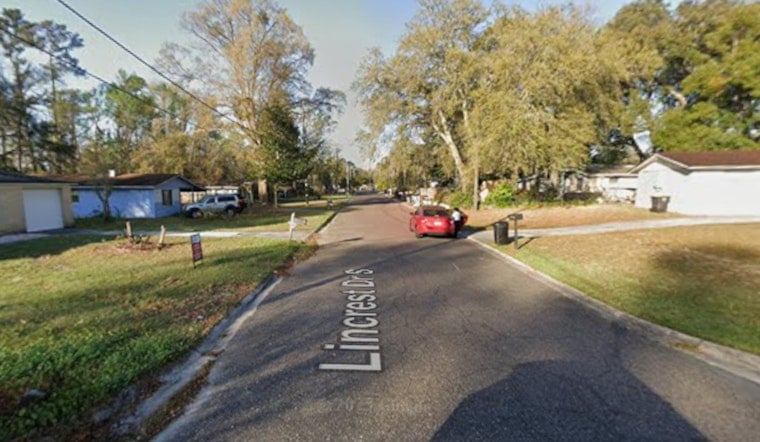
A leg bone spotted near the road in Jacksonville’s Harborview neighborhood led police to a grisly discovery Thursday: human skeletal remains in the backyard of a nearby home, according to investigators. Officers converged on the 4500 block of Lincrest Drive South after a resident reported the bone. The house tied to the find appears abandoned, police said, and shows signs of ongoing construction work.
Police response and evidence recovery
Homicide detectives brought in a cadaver dog and canvassed the yard, where they uncovered additional bones wrapped in carpet material. Investigators then secured a search warrant to fully process the property.
The Northeast Florida Medical Examiner’s Office confirmed the initial bone was human. Evidence technicians worked alongside the medical examiner’s staff to carefully collect the remains, a process authorities warned could stretch on for several hours, according to Action News Jax.
Investigators ask for tips
Detectives said it is too early to determine the person’s gender, age, or how long the body may have been at the property, though officials told reporters the remains could be several years old.
JSO’s crime analysis unit has been digging through databases to identify anyone connected to the address, and detectives expected to remain at the scene into Friday as the investigation continues. Anyone with information is asked to contact the Jacksonville Sheriff's Office at 904-630-0500 or Crimestoppers at 866-845-TIPS, according to the Jacksonville Sheriff's Office.
Property history and next steps
Officials told reporters the property is held under an LLC and that the individual tied to that company is deceased. They added that the residence may have been signed over to another person who has not yet been located.
The bones will be sent for DNA analysis in an effort to identify the person, authorities said, and investigators continue to work what remains an active scene, as reported by Action News Jax.
How identification typically proceeds
When remains are skeletal, medical examiners and law enforcement usually turn to DNA testing, dental comparisons, and national databases to try to put a name to the victim. The National Missing and Unidentified Persons System (NamUs) offers forensic services and maintains a database that can be used in these cases.
If the remains turn out to be older, investigators may also rely on forensic anthropology or genetic genealogy, tools that can extend how long the identification process takes. For general information on those methods and related resources, see NamUs.





