

























































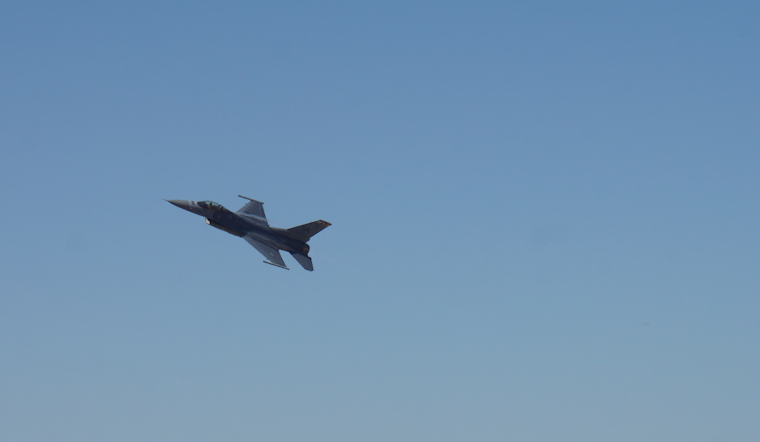
A quiet Saturday over Hagerstown, Maryland, briefly turned tense when an F-16 fighter jet intercepted a civilian airplane that wandered into restricted airspace, military officials said. The jet responded at roughly 12:20 p.m. Eastern, shadowed the aircraft, and stayed with it while it landed safely at a nearby airport. Authorities reported no injuries and said the episode wrapped up without further incident.
According to CBS News, the North American Aerospace Defense Command said the plane had entered a VIP Temporary Flight Restriction in the area and that its pilots “monitored the aircraft” as it came in to land. The outlet noted that NORAD posted about the interception on social media and reminded aviators to “stay sharp” and check for airspace restrictions before every flight.
Why TFRs Matter And How NOTAMs Keep Pilots Out Of Trouble
Temporary Flight Restrictions are short-term limits that the Federal Aviation Administration places on specific chunks of airspace and passes along to pilots through Notices to Air Missions, or NOTAMs, according to the FAA. These restrictions can be set up to protect VIP movements, public safety operations, or major events, and they typically block all civilian aircraft or drones unless they have explicit authorization. The FAA stresses that pilots and operators are expected to review NOTAMs during preflight planning so they do not blunder into a TFR by mistake.
NORAD Urges Pilots To Stay Sharp As Intercepts Climb
The North American Aerospace Defense Command has warned that even accidental trips into restricted airspace can bring out fighter jets and ripple across the national airspace system. In a June press release, NORAD urged pilots to stay on top of current NOTAMs and said, “Most TFR violations are preventable and can be avoided through thorough preflight planning,” Major-General David Moar said. The command noted that it may respond with fighter aircraft, helicopters or other assets to identify and monitor any unauthorized plane.
Recent incidents back up that warning. In March, F-16s scrambled and fired flares to grab a pilot’s attention near Mar-a-Lago, while on June 6, F-16s intercepted a general-aviation plane near Bedminster, New Jersey, and escorted it away from the area. CBS News reported on the Palm Beach interception, and NORAD’s DVIDS news service detailed the Bedminster flight. Together, the episodes point to tighter enforcement around VIP movements and high-profile events.
What Pilots Can Face
The FAA warns that busting a TFR can lead to consequences ranging from a warning or fine to suspension or even revocation of a pilot certificate, depending on what happened. For pilots who suddenly find a fighter jet off the wing, NORAD’s guidance is blunt. As summarized in NORAD’s DVIDS account, intercepted pilots should “come up on frequency 121.5 or 243.0 and reverse course” and then wait for further instructions. The goal is to resolve airspace incursions quickly and safely while keeping people on the ground out of harm’s way.
Local pilots and hobbyists in the Baltimore–Washington region have every reason to take that message seriously and run a NOTAM check before every flight. Hoodline’s earlier coverage of a D.C. intercept traces a similar pattern of near-misses and quick escorts; Stray Plane Draws F-16 Escort offers additional local context. Routine preflight checks prevent most incursions and spare communities the spectacle and safety risk of high-speed military jets overhead.



.jpg)