

























































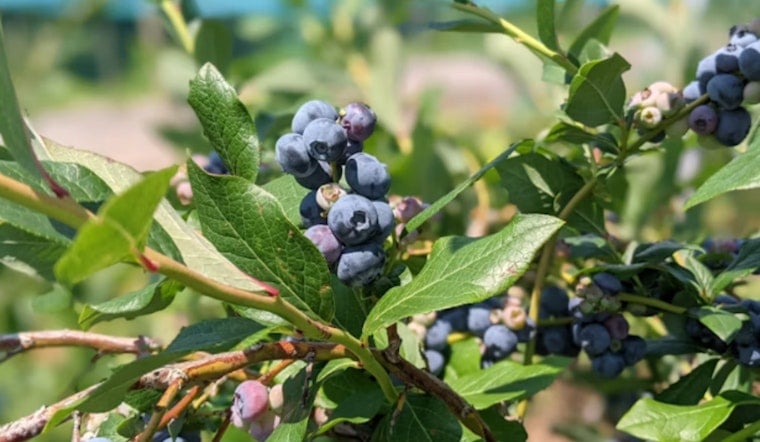
Blueberry bushes across southeastern North Carolina are suddenly collapsing, and it is not the summer surprise growers were hoping for. The culprit is hidden below ground: larvae of a native longhorn beetle that tunnel into and hollow out plant roots, quietly killing bushes from the bottom up. Multiple commercial farms and pick-your-own operations have reported plants that look fine one week and are dying the next, with barely any warning above ground. Researchers and extension agents say that combination of cryptic root damage and seasonal dry weather stress is making early detection a tough job.
Researchers identify the culprit
Scientists at North Carolina State University have pinned the mystery on the tile-horned prionus, Prionus imbricornis, a native longhorn beetle that has apparently taken a serious liking to blueberries. Genetic barcoding of larvae matched P. imbricornis sequences with 98 to 99 percent accuracy, according to NC State News. With a confirmed species in hand, growers and researchers now have a specific target for monitoring and for any future control trials.
How scientists confirmed it
A peer-reviewed profile published June 1 in the Journal of Integrated Pest Management details how the team used DNA barcoding and field monitoring to lock in the identification. Researchers collected larvae and adults from several blueberry farms, matched larval CO1 sequences to adult reference specimens, and provided barcode data and an identification key to separate this beetle from lookalikes. The paper also documents the insect’s multi-year larval development, which means once a field is infested, the problem can linger for several seasons. Journal of Integrated Pest Management describes the research and methods in full.
Damage is easy to miss
The trouble starts where growers cannot easily see it. Larvae feed inside crowns and roots, hollowing out the root system so bushes can weaken, decline or even uproot with little obvious insect activity topside. “It’s kind of surprising that we’re seeing them shifting to blueberries,” researcher Kenneth Geisert told ABC11, warning that the grubs can “literally” chew through the roots growers depend on. That hidden feeding turns routine scouting into a guessing game, especially for farms operating on tight margins.
Where it's been found
To see how widespread the pest might be, a 2025 monitoring program set pheromone-baited black panel traps at six commercial blueberry farms. Over a 25-week season, those traps collected more than 5,200 adult males, with confirmed larval feeding at three sites in Pender, Sampson and Bladen counties. The report notes sudden dieback, crown deterioration and weakened roots that can snap during mechanical harvest, turning a pest problem into a harvest nightmare. It urges standardized trap monitoring and targeted sampling of suspicious plants so growers can catch infestations sooner rather than later. NC State Extension compiled the data and practical guidance.
What growers are doing and what they can't
On the ground, many small and organic growers are going old school: hand-inspecting bushes, digging around crowns, and plucking out larvae whenever they can find them. Some are replanting lost bushes, knowing full well that a young replacement cannot instantly cover the economic hole left by a mature plant. For now, there are no insecticides labeled specifically for Prionus in blueberries. NC State Extension reports that researchers have started insecticide trials and are working with the IR-4 program to evaluate and pursue labels for any products that prove effective, according to NC State News.
Why growers should care
This is not a niche concern. Blueberries are a major crop in North Carolina, with roughly 8,900 harvested acres in 2023 and a farm-gate value of about 104 million dollars, according to state data. Commercial production is heavily concentrated in the southeastern coastal counties now seeing beetle activity. Heavy losses to a root-boring pest like this would stretch out replanting cycles and could hit everyone from small pick-your-own farms to large commercial suppliers. USDA NASS.
Where to get help
Extension agents are urging growers not to ignore a sick-looking bush. They recommend digging up suspect plants to check for frass or hollowed roots, using panel traps with prionic acid lures to track adult beetle activity, and contacting county Cooperative Extension offices for confirmation and trapping resources. NC State maintains monitoring guidance and contacts for small-fruit entomology so producers can report suspected Prionus damage and get help sorting out what is chewing on their roots. N.C. Cooperative Extension.





