

























































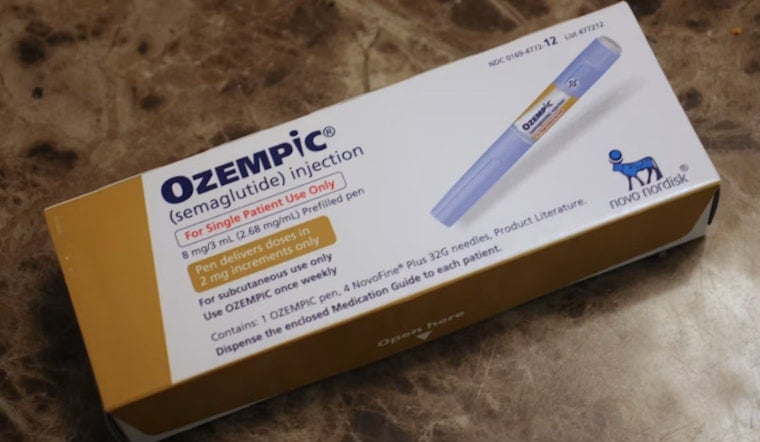
Ozempic is already rewriting the rules on weight loss. Now Rutgers University researchers say the blockbuster drugs in its class might also be quietly taking the edge off some violent impulses, at least for people who are currently using them.
In a new analysis, adults who were actively taking GLP-1 weight loss medications, the group that includes Ozempic and Wegovy, showed much weaker links between impulsive tendencies, alcohol use and self-reported violent behavior than people who had used the drugs in the past. The pattern suggests these medicines might blunt the quick jump from impulse to action, although the authors stress the work is associative and does not prove the drugs directly cause people to become less violent. The research lands amid a nationwide surge in GLP-1 use and fresh calls for careful follow-up studies.
The paper, published this month in the journal Criminology, draws on a 2025 nationally representative survey of 7,521 U.S. adults and centers its primary tests on the 821 respondents who had ever taken a GLP-1 medication. Compared with former users, current users showed about a 62% weaker association between impulsivity and violent acts and about a 52% weaker alcohol-to-violence link, according to reporting by News-Medical.
How the drugs might blunt impulses
GLP-1 receptor agonists were originally designed to help regulate blood sugar and appetite, but researchers increasingly find that these drugs act in brain regions tied to reward, motivation and stress regulation, areas that also shape impulsive behavior. Functional imaging and animal studies suggest GLP-1 signaling can tweak dopamine pathways in the ventral tegmental area and nucleus accumbens, which may help explain why some users report fewer cravings and less risk-taking, according to a systematic review on PubMed.
What the study does and does not prove
The Rutgers team repeatedly warns that the analysis is observational and cross-sectional, so it cannot show that GLP-1 drugs make people less violent. Many other factors could be in play, from differences between people who stay on the medication to unmeasured mental health or lifestyle changes.
"We view this study as a first step, not a final answer," lead author Daniel Semenza told dpa-AFX. The authors call for longitudinal and experimental research to test possible mechanisms and to rule out alternative explanations before anyone treats this as more than an intriguing signal.
Other evidence and public health context
The Rutgers findings arrive alongside several large observational studies that have tied GLP-1 use to reductions in substance use and overdose outcomes, raising broader questions about behavioral effects that go well beyond weight loss or diabetes control. Research groups at major centers have reported lower addiction and overdose risks among GLP-1 users, and public opinion polling suggests the drugs are already deeply embedded in everyday life. About one in eight U.S. adults reported currently taking a GLP-1 drug in a recent KFF poll. Bloomberg and KFF have summarized that broader research and the polling data.
Local ties and ethical questions
Lead author Daniel Semenza directs research at the New Jersey Gun Violence Research Center and works on projects involving Philadelphia youth health, which gives this otherwise national survey work some very local public safety stakes.
At the same time, bioethicists caution that using medical treatments as tools to influence criminal behavior raises hard questions about consent, coercion and fairness. Those concerns are unpacked in a recent review of medico-legal interventions, which explores how far society should go in trying to pharmacologically shape behavior, as discussed in detail on PMC.
For now, the Rutgers paper is best treated as a provocative association that deserves serious follow-up, not as a ready-made crime control strategy. Researchers and clinicians say randomized and longer-term studies are needed to see whether GLP-1 drugs truly change violent behavior over time. For the original local broadcast coverage, see CBS Philadelphia, and for the scholarly record consult the paper in Criminology.




