

























































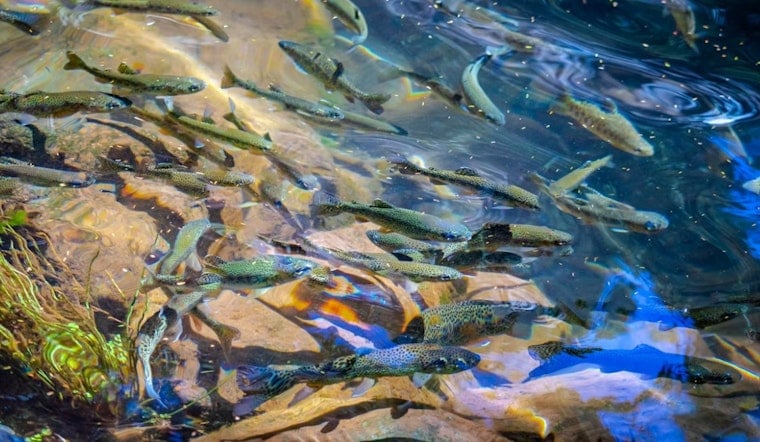
A toxic chemical born from everyday car tires is now turning up along San Francisco Bay shorelines, and levels spike after winter storms. The compound, 6PPD-quinone (6PPD-Q), is a transformation product of a common tire antioxidant and can kill sensitive salmon species at extremely low doses. Local researchers say the finding raises new alarms for steelhead and other Bay-area fish that return to spawn just as storm runoff peaks.
New monitoring data from the Bay’s Regional Monitoring Program show measurable 6PPD-Q in open Bay waters, with the highest concentrations hugging the shoreline after winter storms, according to the San Francisco Estuary Institute. The dataset, collected between 2021 and 2024, is among the first to document the compound in estuaries rather than only in urban streams. SFEI scientists say those nearshore buildups line up with the season when steelhead move from the ocean into local watersheds to spawn.
What 6PPD-Q Is And Why It Kills Fish
6PPD-Q forms when the tire antioxidant 6PPD reacts with ozone and other environmental agents, creating a quinone that washes off tire wear particles and into stormwater. Scientists first linked 6PPD-Q to mass salmon deaths in a landmark study described in a 2020 Science paper listed on PubMed, which found lethal effects at sub-microgram-per-liter concentrations. Later laboratory and field work has confirmed that some salmonid species, particularly certain life stages, are highly sensitive to the compound.
Why Bay Scientists Are Watching
Coho salmon are no longer common in the Bay, but researchers say the chemical could still threaten steelhead and other species, especially when storms flush concentrated runoff into shallow, nearshore habitat. “It is a transformation product from an ingredient that’s intentionally added to tires. So pretty much every tire on the market right now has this chemical,” SFEI senior scientist Ezra Miller told ABC7. Biologists such as Charlie Schneider of California Trout are worried about longer-term, multi-species impacts as the chemical moves through Bay watersheds.
Regulators Move Toward Controls
California regulators have already started to go after the source ingredient. The Department of Toxic Substances Control has listed motor-vehicle tires containing 6PPD as a Priority Product under the state’s Safer Consumer Products program, triggering a formal alternatives review and supplier reporting process. The DTSC regulatory text and guidance spell out deadlines and procedures for manufacturers’ alternatives analyses, according to DTSC. At the federal level, the U.S. Environmental Protection Agency has opened technical reviews and an action plan for 6PPD and its transformation products as part of a broader response, according to EPA.
How Cities And Agencies Are Trying To Stop Runoff
While policy grinds forward, practitioners are testing on-the-ground fixes to strip tire-derived chemicals from stormwater before it reaches fish habitat. Column and field tests coordinated by King County found that certain high-performance bioretention media can significantly reduce 6PPD-Q concentrations and prevent acute mortality in exposure trials, according to a King County lab report. The Interstate Technology & Regulatory Council and other agencies are compiling mitigation measures and testing media blends while product-level solutions are developed, according to ITRC and King County technical reports.
Local Monitoring And What Comes Next
The Bay’s Regional Monitoring Program will keep sampling the estuary to pinpoint where and when 6PPD-Q shows up and to guide managers on targeted retrofits and seasonal protections, according to SFEI’s monitoring plan. SFEI’s Water Year 2026 sampling and analysis plan expands testing for tire-derived chemicals around the estuary and will feed into regional cleanup and stormwater-mitigation priorities. Those data are expected to help determine whether near-term investments in filters and bioretention are warranted where steelhead and other sensitive species overlap with urban runoff pathways.
Legal And Policy Implications
DTSC’s Priority Product designation gives the state leverage to require detailed alternatives analyses and could eventually lead to product limits or sales restrictions if safer substitutes are identified and approved. For now, regulators, manufacturers and water managers are juggling costly infrastructure fixes while industry tests replacements for a decades-old tire additive.
SFEI’s new data make it clear that everyday traffic is sending more than microplastics into the Bay, it is also delivering a chemical that can kill fish at tiny doses. Scientists say the likely remedy has two tracks: plug the pipeline with better stormwater treatment now, and push for safer tire chemistry over the longer term. The next rounds of RMP sampling will help show how urgent each of those tracks is.





