

























































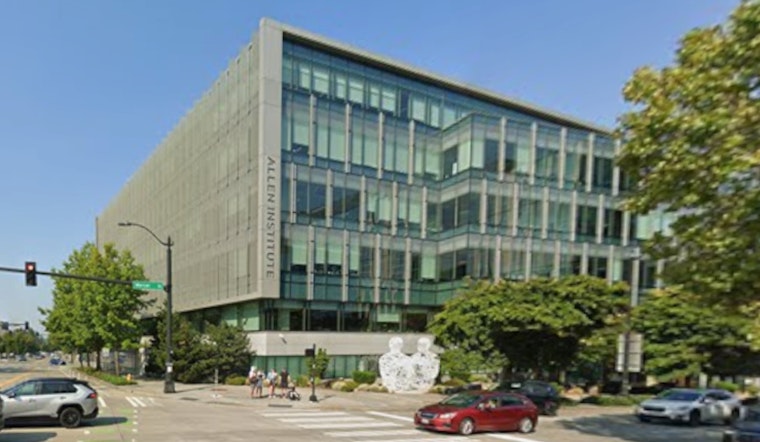
Seattle's Allen Institute is putting serious money behind a big promise, rolling out its new Brain Health accelerator on Tuesday with a $400 million commitment aimed at speeding up treatments for neurodegenerative disease. The multiyear effort will zero in on the specific cell types and neural circuits most hammered by Alzheimer’s, Parkinson’s, Huntington’s and ALS, combining human brain tissue studies with large-scale imaging, single-cell genomics and AI. With backing from philanthropy, corporate cloud muscle and federal research partners, the institute says the program is built to turn discoveries into therapies faster than past, more fragmented efforts ever could.
What the Brain Health accelerator will do
According to a press release from the Allen Institute, Brain Health will start by focusing on Alzheimer’s, Parkinson’s, Huntington’s, ALS and Lewy body dementia, and will lean heavily on studies of healthy and diseased human brain tissue to pinpoint which cells and circuits are most vulnerable. Executive Vice President Ed Lein called for “a cross-disciplinary, integrative approach” to uncover a deep “ground truth” about how these conditions unfold and to guide more precise, cell-specific therapeutic strategies.
Who's funding it
The accelerator is launching with $400 million already committed: $200 million from the Allen Institute itself, $100 million from the Bezos family and another $100 million from partners that include Amazon Web Services, the NIH and EverythingALS, as reported by the Puget Sound Business Journal. Leaders say the mix of big-ticket philanthropy, corporate cloud backing and federal research investment is meant to cover both a major wet-lab expansion and the heavy-duty computing needed to make the resulting models and data broadly useful.
Seattle's research muscle
The Allen Institute has long served as one of Seattle’s flagship hubs for large, open-science projects, and the Brain Health accelerator is essentially that same playbook aimed at translational goals, according to the institute’s announcement. Leaders and local researchers say the emphasis on human-first data, open tools and cloud-scale compute could help pull more computational neuroscientists, biotech startups and clinical collaborators into the region.
A technology tipping point
The timing lines up with a wave of technological advances highlighted by the NIH’s BRAIN Initiative. Single-cell genomics, spatial transcriptomics and AI-enabled analysis now make it realistic to generate and probe enormous, multidimensional human datasets. Project leaders say Brain Health will be built for AI from day one so models can flag hypotheses, predict which cell types are most at risk and help rank potential therapeutic strategies.
What to watch next
Early on, the institute expects to roll out new human-tissue atlases, openly available datasets and computational models that other labs can plug into, according to materials shared at the launch. Photos and local coverage show Rui Costa, the institute’s president and CEO, speaking at the unveiling, as reported by the Puget Sound Business Journal, and the institute’s press packet outlines plans for rapid data-sharing and tight collaboration across academic, corporate and federal teams.





