

























































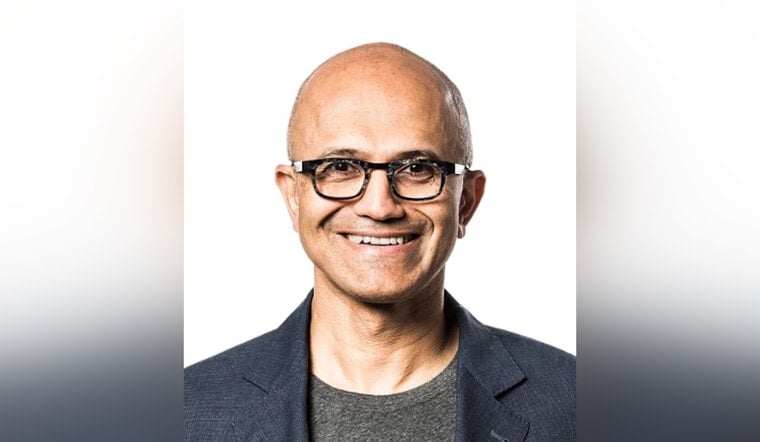
Satya Nadella is not exactly selling a carefree AI future. Microsoft’s CEO warned this week that if just a handful of AI models end up capturing most of the economic value, they could “hollow out entire industries.” The warning came alongside a broader argument that companies need to own their learning loops and keep human judgment firmly at the center of AI-driven work.
In a long post titled "A frontier without an ecosystem is not stable," Nadella argued that companies must build both “human capital” and what he called “token capital,” and he wrote bluntly that “there is no societal permission for an AI future that hollows out entire industries.” As he framed it on X, the real competitive advantage will belong to organizations that can turn workflows and judgment into learning systems, not those that simply rent the most powerful model available. The message was picked up locally and summarized by the Puget Sound Business Journal.
Nadella hit similar notes during a live taping of The New York Times' "Hard Fork" podcast, where he cautioned Microsoft staff and customers to avoid what some engineers call “tokenmaxxing,” or overusing the priciest models for routine work. That conversation is archived on the Hard Fork podcast and doubles down on the same theme: use frontier models where they truly matter, and build private learning loops where firms can compound their own intellectual property.
For Seattle, this is not an abstract debate. Microsoft’s headquarters and much of the region’s AI ecosystem sit right in the middle of the shift Nadella is describing. The company has been aggressively rolling out its own agent platforms and in-house models at Build 2026, part of a push to make Copilot and related tools the default way people work. Fortune reported on Microsoft’s Project Solara and its new model family, while tech employment has already been volatile in the background. Crunchbase's layoffs tracker shows tens of thousands of tech jobs cut across the U.S. in recent years, a reminder that structural shifts in the industry come with very real human consequences.
The timing of Nadella’s warning also intersects with a clear signal from Washington, D.C. Regulators have already shown they will step in when models become strategically sensitive. In mid-June the U.S. government ordered Anthropic to suspend access to its Fable 5 and Mythos 5 models for foreign nationals, a move that forced the company to disable those models worldwide and underscored Nadella’s point about concentration and sovereignty in the AI stack. The Guardian chronicled the government action and Anthropic’s response.
Legal and regulatory stakes
The Anthropic shutdown shows how export controls, national security reviews and procurement rules can instantly change which models enterprises are allowed to use, creating a new kind of supply-chain risk for Copilot customers and startups alike. Industry analysts and security groups note that this is the first time export-control authority has been used to block model access in this way, and organizations should plan for multi-model fallbacks and contractual protections, according to a research note from the Cloud Security Alliance.
For Seattle, the takeaway is relatively simple, even if the implementation is not. Owning the learning loop matters not just for competitive edge but for resilience. As Nadella urged, firms that build human-plus-token capital, and do so on infrastructure they control or can replace quickly, stand the best chance of keeping jobs, IP and revenue anchored locally as the AI era rewrites the rules of work.





.jpg)