

























































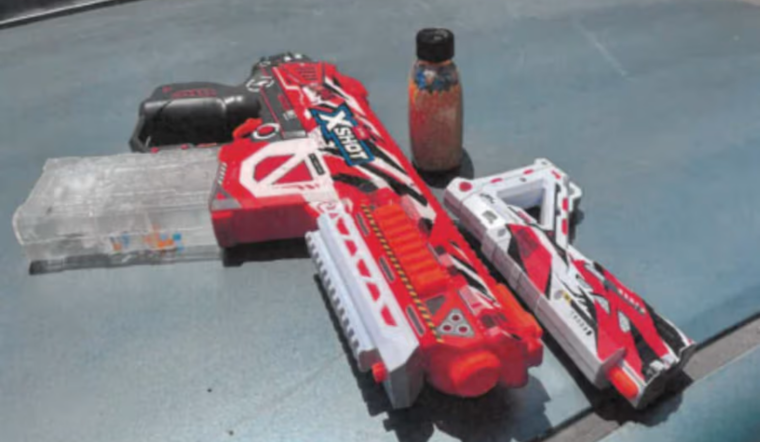
Two Seminole County teenagers are accused of turning suburban sidewalks into their own target range, driving around and firing gel-blaster projectiles at people out for a walk in late May. Victims reported sharp pain and visible welts where they were hit, and at least one woman was struck multiple times in the back of her neck. The suspects are 18-year-old Bryant Otero Villegas and a 16-year-old boy; investigators are not publicly naming the younger teen because he is a juvenile.
According to WKMG ClickOrlando, the episodes were reported on May 18 in Oviedo and May 20 in Winter Springs. Arrest reports say investigators used the Flock license-plate reader network to trace an older green Toyota Corolla, then pulled the car over near Winter Springs High School. Inside, they reported finding an X-SHOT Gel Blaster HPG-700 and gel BB projectiles. The 16-year-old driver allegedly told investigators that he and Otero Villegas had fired at people after ju-jitsu training. Detectives later searched Otero Villegas’s Casselberry home, where he reportedly admitted being involved and handed over another gel blaster.
How License-Plate Readers Figured In The Case
Automated license-plate reader systems capture quick images of plates and vehicles, creating a trail that can show where a car has been and when. In this case, that digital breadcrumb trail helped officers follow the Corolla’s movements and connect it to the reported sidewalk attacks.
Flock-style cameras are now used by many law-enforcement agencies, and their growth has sparked debates over how long data should be kept, who can access it and what kind of oversight is needed. Some states are moving to put guardrails around the technology. The Oregon Capital Chronicle has outlined how new rules in Oregon seek to regulate license-plate readers and why lawmakers are paying attention.
Old Prank, New Trouble
Law enforcement around the country has been warning for years about the so-called “Orbeez” or gel-ball trend, where water-soaked beads are fired from toy blasters and, too often, at unsuspecting strangers. What might look like a silly social-media challenge can leave real marks.
National and local coverage has documented Florida incidents in which gel pellets left red welts or even broke the skin, with some cases ending in arrests. Those reports underline that what some teens may consider a harmless prank can, legally, cross the line into a criminal assault. For background and prior warnings, see reporting from Newsweek and FOX 35 Orlando.
Charges And Legal Outlook
Both teens later turned themselves in and are facing battery charges, WKMG ClickOrlando reports.
Under Florida law, battery occurs when someone intentionally touches or strikes another person against their will or intentionally causes bodily harm. It is generally treated as a first-degree misdemeanor. Prosecutors can seek felony charges if an attack results in serious injury or under certain repeat-offense conditions. Legal definitions are laid out in state law in Florida Senate materials.
The arrests underline a point police have been making for a while: Toys meant for backyard play can inflict real harm when they are turned on strangers in public. Prosecutors will now review the case and decide whether the reported injuries fit misdemeanor battery or justify pursuing more serious charges under Florida law.





