

























































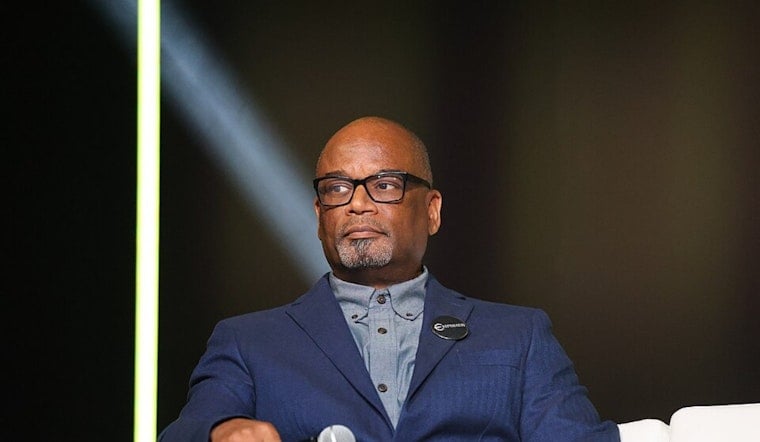
D’Wayne Edwards has spent a career designing sneakers for Jordan and other top athletes. Now he’s channeling that résumé into rebuilding a Detroit institution, quietly transforming a decades-old business school into a design-focused Historically Black College and University. At Pensole Lewis College of Business & Design, classroom studios sit next to industry labs, a small factory, and direct employer pipelines that are explicitly geared toward getting students into paid work. The concept leans on Edwards’ industry clout, plus philanthropic and corporate backing, to upend how design talent is cultivated in the city.
From Brand Rooms To Student Studios
According to The Business of Fashion, Edwards logged more than three decades at major footwear companies before launching Pensole as an education platform aimed at broadening access to design careers. He also started the Future Sole youth contest to spotlight young designers and plug them into brand pipelines, as reported by Sneaker Freaker. That playbook brings real employer briefs into the studio so students are solving industry problems in class and, ideally, moving into jobs faster.
From Jordan Brand To Classrooms
Edwards’ portfolio runs to hundreds of sneaker styles, including work for Jordan Brand and signature shoes worn by players like Carmelo Anthony, according to PRINT Magazine. That kind of pedigree makes it easier to persuade companies to feed actual product work and resources into the curriculum. Students and alumni say the result is a set of portfolios that look less like class projects and more like market-ready concepts, tightening the leap from campus to a paycheck.
Industry Partnerships Fuel The Pipeline
The revival has also drawn serious philanthropic money. Dan and Jennifer Gilbert’s Gilbert Family Foundation has pledged roughly $10 million to programs tied to the college, according to the Detroit Regional Chamber. The school relaunched in partnership with the College for Creative Studies, which outlined the joint venture and named Target and other corporations as founding supporters. Those alliances are designed to generate paid internships and clearer hiring channels instead of asking students to rely on a degree alone and hope someone calls.
Where The School Lives
Pensole Lewis is housed in Bedrock’s Icon Building along the Detroit riverfront at 200 Walker Street, a complex the city describes as roughly 420,000 square feet, according to the City of Detroit. At full capacity, the college expects to host about 500 to 550 in-person students, as reported in a New York Times profile published today. Hoodline has previously tracked the college’s comeback and early studio activity.
Why It Matters
“I don’t dream small,” Edwards told The New York Times, laying out a vision to build not just designers but makers, managers, and manufacturers in Detroit. The project has picked up civic recognition along the way: Detroit officially declared May 27 “Violet T. Lewis Day” at a ceremony on campus, honoring the school’s original founder, as reported by HBCU News. Supporters argue that a revived, design-driven HBCU can both protect a historic legacy and funnel residents into mid-skill, higher-wage roles as Detroit rebuilds its creative and manufacturing economy.
The approach is already showing up in the real world. Designer Brands’ investment in a Black-owned U.S. footwear factory, along with other company grants, gives students a path from sketch and prototype to actual production, according to a company announcement on PR Newswire. The college first reopened in 2022 with a small in-person cohort and has been steadily expanding its programs and employer connections since, as reported by CBS News Detroit. If the model keeps working, Detroit’s reimagined HBCU could become a template for other cities looking to bolt their cultural institutions directly to industry pipelines.




