

























































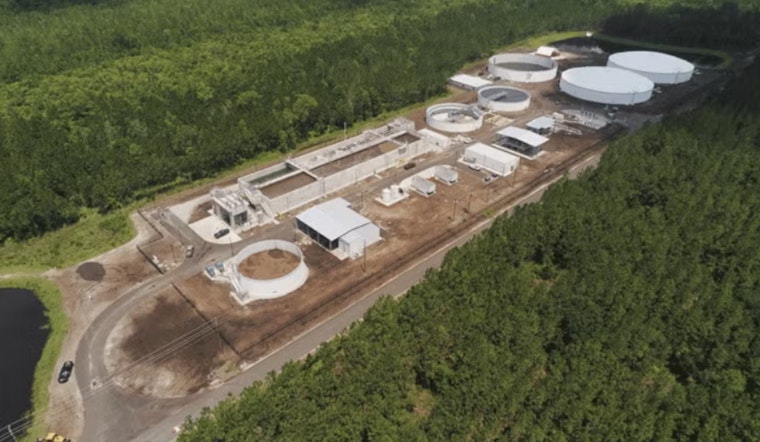
St. Johns County just flipped the switch on its biggest public-works project ever, and it is not a small one. The $191.8 million State Road 207 Water Reclamation Facility, now officially in service, is starting to send treated wastewater into the county’s reclaimed-water system, a move local leaders say will boost capacity and help protect the region’s drinking-water aquifer as growth keeps marching west.
What the project includes
As reported by the Jacksonville Business Journal, the overall program is more than just a plant on SR 207. It also includes multiple pump stations and about 15 miles of wastewater and reclaimed-water pipelines that move treated effluent around the county for reuse. Contractors have been tying those new mains into the existing reclaimed network so neighborhoods, parks and other public spaces can use the water for irrigation instead of tapping the aquifer.
Capacity, contractor and timeline
Jacobs, the design-build contractor on the job, says the SR 207 WRF is starting out with the ability to treat roughly 3.25 million gallons of wastewater per day, with the bones in place to double that to 6.5 MGD as demand ramps up. The firm and county documents put the price tag for the full program at about $191.8 million. The project has been fast-tracked by running design and construction in parallel, a strategy intended to get the facility online sooner than a traditional step-by-step schedule.
Environmental benefits
According to St. Johns County, the SR 207 facility is designed to produce 100 percent reclaimed water for non-drinking uses and, once fully up to speed, to help cut the nutrient load that would otherwise end up in the Matanzas River. “This project allows us to substitute a slightly lower quality of water for irrigation, extending the useful life of our aquifer for many years,” county senior engineer Alan Flood said in project materials. County estimates project that the system will keep more than 1 million pounds of nutrient pollutants out of local waterways over a 20-year period.
Why state rules matter
State policy is a big part of why projects like SR 207 are happening now instead of a decade from now. As outlined by the Florida Senate, utilities that send treated effluent into rivers, creeks or other surface waters were required to file plans to end non-beneficial surface-water discharges and to fully carry out those plans by January 1, 2032. Building out reclaimed-water capacity is one of the main tools utilities across Florida are using to hit that deadline while taking some pressure off groundwater that would otherwise be pumped for irrigation.
Where this fits in the county plan
County leaders have framed the SR 207 WRF as the single largest line item in a wider infrastructure push worth more than $820 million in projects planned or completed across 2025 and 2026. The new inland facility is also expected to take strain off the Anastasia Island wastewater plant by shifting some flows away from the coast and improving system resilience during major storm events, according to News4Jax.
St. Johns County expects the SR 207 project to reach substantial completion by Summer 2026. The county’s Office of Public Affairs has been posting progress videos and project materials online, and the St. Johns County Utilities Department lists contact information on its project page for residents who want details about reclaimed-water service or construction in their area.



