

























































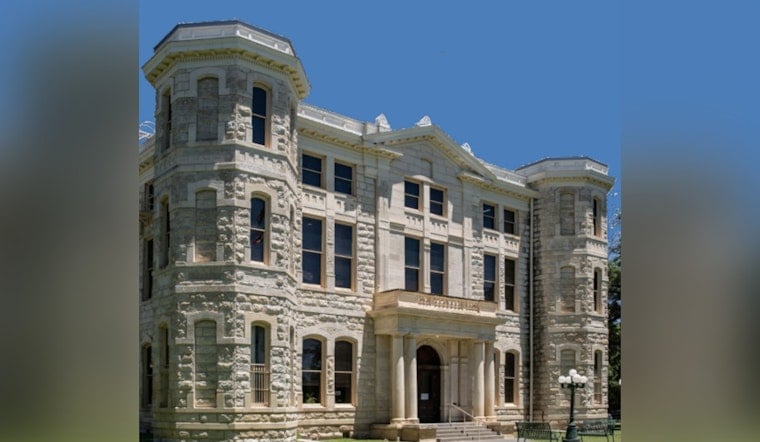
Texas' 2023 election oversight law, written after a rough 2022 cycle in Harris County, is getting its first real workout along the Rio Grande. This month, the Secretary of State's office has stepped in to take administrative control of voter registration in Val Verde County, citing a string of mistakes and missed procedures. State officials are selling the move as a straightforward fix, but the experiment in Del Rio is already prompting nervous glances from far larger counties, especially Harris.
As reported by The Texas Tribune, the state moved in after a preliminary audit of Val Verde's November 2024 election flagged duplicated registrations, voters placed in the wrong districts and other process breakdowns. According to the Tribune, it is the first time the 2023 law has been used to put a county office under direct administrative oversight instead of focusing primarily on Harris County. Local leaders in Del Rio told reporters they were open to the help and promised to work through the audit's findings.
According to the Secretary of State's preliminary audit, linked by the Texas Secretary of State, Val Verde had no written voter registration policies, repeatedly created new voter files instead of updating existing ones and failed to consistently track jurisdictional boundaries. Those issues helped drive up the number of provisional ballots. The audit notes that state staff provided hands-on training in both 2023 and 2024 but concluded the county had not locked in lasting fixes. The report recommends placing the tax assessor-collector's voter registration office under formal administrative oversight.
The legal muscle for the intervention comes from Texas Legislature analysis of Senate Bill 1933, which gives the Secretary of State authority to investigate election administration complaints, run randomized audits and, if it finds a pattern of recurring problems, order administrative oversight. Under the statute, state staff can demand that county election policies be submitted for approval, watch election operations in person and, if the same problems keep popping up, ask a court to remove an elected county official or eliminate an elections administrator position entirely. SB 1933 took effect on September 1, 2023, and spells out notice requirements, response timelines and reporting rules for any oversight period.
Another 2023 change, Senate Bill 1750, dissolved Harris County's appointed elections administrator office and handed those duties back to elected officials, a move critics argued was aimed squarely at the state's largest county. Votebeat reported that SB 1750 and related proposals were pushed by lawmakers who pointed to equipment breakdowns and long delays during Harris County's 2022 elections. The shift back to elected officials took effect in September 2023 and triggered court fights and a broader political argument over how much control the state should have over local elections.
Houston officials have been watching all of this like hawks. In January, Gov. Greg Abbott publicly floated the idea that the state should take over Harris County elections after a Republican complaint, prompting a swift rebuttal from county leaders, according to the Houston Chronicle. Harris County Attorney Jonathan Fombonne and other local officials argued the governor does not have the power to seize control of election operations and pointed out that the tax office, not the county clerk, is responsible for maintaining the voter rolls.
Local media have framed the Val Verde test case as equal parts technical cleanup and political flashpoint. Houston Public Media's "Houston Matters" devoted a June 22 segment to walking listeners through what state oversight actually looks like on the ground and how smaller counties experience it. Guests on the show noted that state officials describe the goal as helping counties fix administrative breakdowns, while critics worry about the optics of state staff essentially running parts of local elections. The tension in that conversation has echoed in coverage across Texas as the law is used for the first time outside of a Harris County context.
How the Oversight Process Plays Out
Under Texas Legislature analysis of SB 1933, the Secretary of State has to notify a county when a complaint is filed and give local officials time to respond, typically 30 days, before deciding whether to impose oversight. Once oversight begins, the office must issue quarterly reports while supervision is in place. The oversight period can stretch until the end of the even-numbered year following the first anniversary of the original complaint or end earlier if the Secretary of State decides the recurring problems have been fixed. If the county still falls short, the law allows the state to seek removal of a county official or terminate the role of an elections administrator, legal moves that carry both procedural and political fallout.
What Houston Voters Should Watch
For now, the action is in Val Verde County, but Houston residents have a clear reason to pay attention. Voters can watch for any new complaints filed with the Secretary of State, fresh audit reports and the county's formal responses. The Texas Tribune reported that a more detailed report outlining the specific terms of Val Verde's oversight is expected this summer. State auditors and county officials alike say oversight can be temporary if counties put real fixes in place, although the same law lets the state keep supervision going if problems linger. For Houston, the episode serves as a reminder that seemingly routine list maintenance and paperwork errors can draw sharp scrutiny under the statute that already reshaped how Harris County runs its elections.





