

























































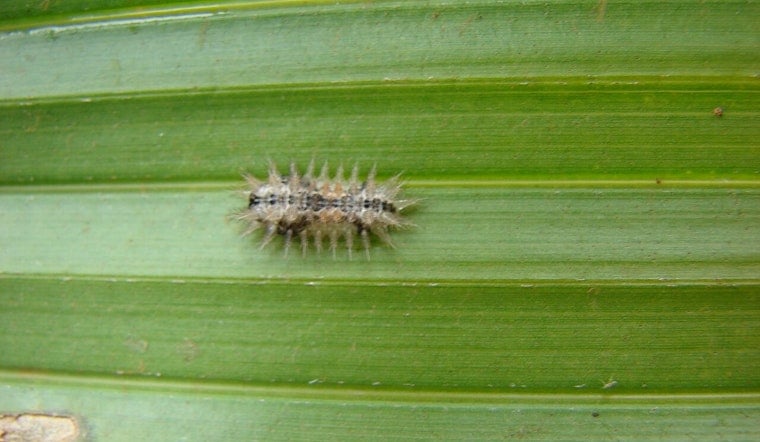
Stinging nettle caterpillars are making an unwelcome comeback across Hawaii, and the state is answering with an air force of tiny parasitic wasps.
From Haiku on Maui to windward Oʻahu, residents have been spotting the small, spiny larvae on ornamental plants. The caterpillars can deliver a burning, painful sting and strip foliage from ti leaves and areca palms. State officials say stepped-up wasp releases and watchful neighbors are their main tools to contain new flare-ups while researchers keep tabs on how far the pests are spreading.
The fresh push in biocontrol work follows direct requests from several communities. Technicians have been releasing about 150 wasps at each site, with roughly 1,500 released over the last four months, according to Hawaii News Now. The outlet quoted Department entomologist Reina Tong, who explained that the caterpillar’s tiny spines release a “mixture of histamines” that irritates skin. The good news for humans: the wasps attack only the nettle caterpillar larvae and do not sting people. A Maui grower told the station she has found about a dozen of the caterpillars in Haiku over the past six months.
How The State Is Fighting Back
The Hawai‘i Department of Agriculture & Biosecurity has used stingless parasitic wasps for years as a tightly targeted, host-specific control for the nettle caterpillar. Past releases of Aroplectrus dimerus helped knock back outbreaks instead of relying only on broad insecticides, per the Hawai‘i Department of Agriculture & Biosecurity. Department materials and reports stress that the wasp goes after nettle caterpillars alone and is considered safe for people and pets.
Why These Caterpillars Matter, And What To Do If You Are Stung
The stinging nettle caterpillar (Darna pallivitta) first turned up on Hawai‘i Island in 2001. Its body is covered in urticating spines that can trigger burning, itchy welts and, in some cases, serious allergic reactions, according to a UH–CTAHR fact sheet. UH–CTAHR advises washing the sting site with soap and water, taking an oral antihistamine or using topical hydrocortisone to manage itching, and seeking immediate medical care if there are breathing difficulties or if the eyes are exposed. Peak caterpillar numbers typically arrive in late summer.
What Residents Should Watch For And Report
Residents are being asked to keep an eye on favorite host plants like ti, dracaena and palms. Signs of trouble include missing chunks of foliage, small thin caterpillars often shorter than a fingertip, and clusters of eggs on the undersides of leaves. Officials warn against touching the larvae directly, and recommend wearing gloves when checking plants.
People who suspect an infestation are urged to send in photos and details to the state’s pest hotline at 643‑PEST (643‑7378), per the Hawai‘i Department of Agriculture & Biosecurity. The department says it will prioritize community requests for on-the-ground biocontrol releases.
Teams plan to continue targeted wasp releases in known hotspots and ramp up monitoring as summer wears on. Gardeners and growers are being encouraged to trim host plants before peak months and to call the pest hotline with photos to help the state move faster when new caterpillar clusters appear.





