

























































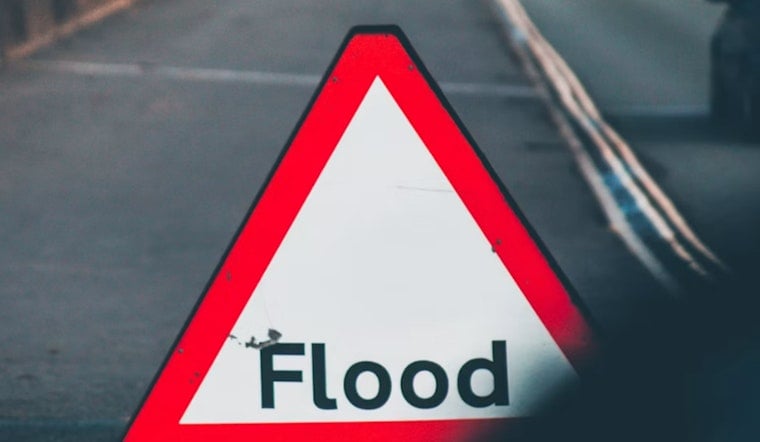
On a soggy Saturday afternoon, central North Carolina got an unwelcome weather surprise when heavy downpours prompted the National Weather Service office in Raleigh to issue a flood advisory for parts of the Piedmont. The alert went out at about 4:16 p.m. and focused on Edgecombe, Johnston, Nash and Wilson counties, warning of flooding in low-lying and poor-drainage areas. Drivers quickly began reporting standing water on several roads as storms rolled through.
According to The News & Observer, the National Weather Service cautioned that "flooding caused by excessive rainfall is expected" and urged anyone in flood-prone spots to head to higher ground if water starts to rise. The paper also noted the now-familiar NWS reminder: when you hit a flooded roadway, "turn around, don't drown."
Where the advisory applies
The advisory zeroed in on Edgecombe, Johnston, Nash and Wilson counties and was set to expire at about 6:15 p.m., according to local alert trackers. Weather Underground listed the advisory for those four counties and highlighted the main concerns as minor street flooding, small-stream flooding and ponding in areas with poor drainage.
How little water can become dangerous
The National Weather Service points out that it does not take much water to create a dangerous situation. Roughly 6 inches of fast-moving water can knock an adult off their feet, and about 12 inches can carry away most cars. Those are the hard numbers behind the NWS "Turn Around, Don't Drown" campaign that urges drivers to avoid flooded roads whenever they can.
Driving tips and hydroplaning risks
Hydroplaning, which happens when tires ride up on a thin layer of water and lose contact with the pavement, becomes more likely at higher speeds, in deeper standing water and when tire tread is worn, AAA explains. The group advises motorists to slow down, switch on headlights, leave extra following distance and steer clear of large puddles. If a vehicle does start to hydroplane, drivers should ease off the accelerator and steer gently until the tires grip the road again.
Stay alert
Local emergency managers urged residents to keep an eye on National Weather Service updates and county alerts for any changes to the advisory or potential evacuation instructions. They also encouraged the public to report flooding so officials can track and respond to trouble spots. For Johnston County residents, Johnston County Emergency Services maintains a flooding preparedness page that includes safety guidance and links to local alert signups.





