

























































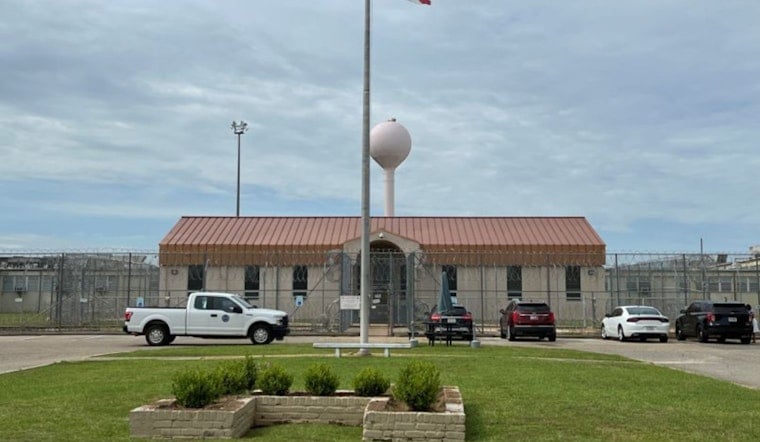
The U.S. Supreme Court on Thursday night refused to lift an injunction blocking Alabama from executing Jeffery Lee by nitrogen gas, halting what would have been the nation’s ninth nitrogen execution. The brief, one-line order followed days of emergency filings and whiplash rulings in federal court that left state officials scrambling. Lee’s execution was set for Thursday evening at Holman Correctional Facility in Atmore.
According to AP News, the justices denied Alabama’s last-minute request in a 6-3 vote, with Justices Clarence Thomas, Samuel Alito and Neil Gorsuch indicating they would have granted the stay. A spokesperson for the Alabama Department of Corrections told reporters that the execution was off for the night and that the state would not try to use a different method that evening.
Fast-Moving Federal Fight Upended the Timetable
The case rocketed through the federal courts. A three-judge panel of the 11th U.S. Circuit Court of Appeals concluded that the state’s nitrogen protocol “presents a ‘substantial risk of serious harm,’” describing it as the risk of severe pain over and above death itself, and reversed an earlier ruling in Alabama’s favor. The panel’s unsigned opinion spelled out the expert testimony and factual findings the judges relied on.
U.S. District Judge Emily C. Marks then revisited the record and issued a ruling that barred Alabama from using nitrogen to execute Lee, as reported by The Guardian. That injunction is the order the Supreme Court declined to disturb.
How Nitrogen Hypoxia Works and Lee’s Case
According to AP News, nitrogen hypoxia involves replacing breathable air with ultra-high-purity nitrogen delivered through a respirator-style mask, causing death by depriving the body of oxygen. Alabama adopted nitrogen executions in 2024, and critics point to earlier nitrogen executions in the state in which inmates were seen gasping and thrashing. AP News noted that in one such case, about 30 minutes passed between the first visible effects and the closing of the execution chamber curtain.
Lee was convicted of killing Jimmy Ellis and Elaine Thompson during a 1998 pawnshop robbery. At trial, the jury voted 7-5 for a life sentence, but the judge overrode that recommendation and sentenced Lee to death.
Legal Implications
The 11th Circuit relied on the Supreme Court’s Glossip framework, along with its more recent Nance guidance, to conclude that Lee had shown an objectively intolerable risk of severe pain, a point the court discussed at length in its opinion. Legal scholars say that a definitive Supreme Court ruling on the constitutionality of nitrogen executions would be a landmark moment. As The Guardian noted, experts warn that a high-court decision striking down an execution method as unconstitutional would be unprecedented.
For now, the reprieve remains in place while Alabama officials say they will continue to pursue appeals, and Lee’s lawyers have hailed the Supreme Court’s refusal to intervene as a vindication of the lower court’s findings, according to Spectrum News. Governor Kay Ivey has maintained that she is committed to ensuring justice is served for the victims, and the fight over nitrogen executions is widely expected to return to the Supreme Court.





