

























































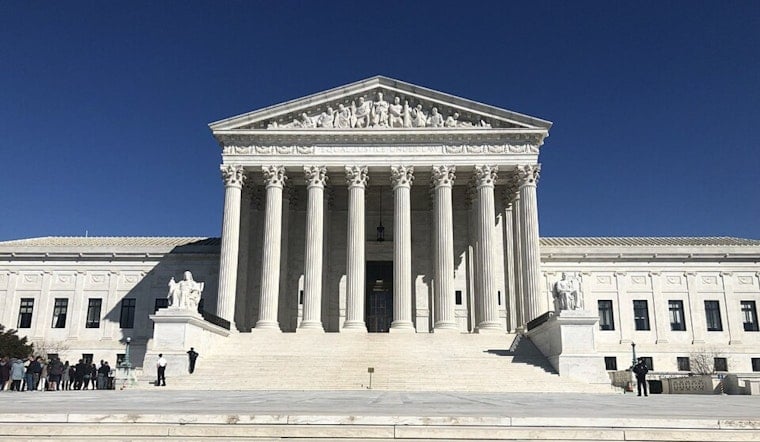
The Supreme Court today shut down President Donald Trump's bid to end birthright citizenship, leaving intact a long-standing reading of the 14th Amendment that treats nearly everyone born on U.S. soil as a citizen. The 6-3 ruling leaned heavily on the century-old Wong Kim Ark precedent, a legal battle that began in San Francisco's Chinatown and still shapes who gets to call this country home.
What the court decided
Chief Justice John Roberts wrote the majority opinion, holding that the Citizenship Clause guarantees automatic citizenship for children born on U.S. soil, with only a few narrow exceptions. Three conservative justices dissented, arguing that the administration's order could have been allowed to stand. The decision wipes out the immediate legal threat posed by the executive order and closes the Court's latest chapter on the issue, according to AP News.
San Francisco's link to the ruling
Wong Kim Ark's fight for citizenship started right here in San Francisco and has long anchored the country's approach to birthright citizenship. This week, city officials unveiled a new plaque in Chinatown honoring Wong, with descendants, including Sandra Wong, on hand for the dedication. She called birthright citizenship a statement about who we are as a nation. Mayor Daniel Lurie praised Kim Ark as brave and pledged to defend immigrant rights while in office, as reported by The San Francisco Standard.
Wong Kim Ark and the 14th Amendment
The 1898 case United States v. Wong Kim Ark interpreted the Citizenship Clause to cover most children born in the United States, carving out only limited exceptions such as children of diplomats and occupying forces. That century-old ruling sat at the center of the modern Court's reasoning and of the briefs from both sides, as explained by The Washington Post.
What comes next
President Trump's executive order, Executive Order 14160, signed Jan. 20, 2025, sought to deny citizenship to children born in the United States to parents who are unlawfully present or only temporarily here, and it instructed federal agencies to overhaul how they recognize citizenship. The text of the order remains posted on the White House website. Lower courts had already blocked major portions of the order as the case climbed toward the high court, and researchers warned that roughly a quarter-million births each year were at stake, according to AP News.
Local advocates and reaction
San Francisco legal organizations that joined the lawsuit quickly celebrated the ruling as a shield for immigrant families and for long-settled constitutional guarantees. Attorneys with the San Francisco-based Asian Law Caucus and partner advocacy groups said the decision preserves crucial legal certainty for children born in the United States, according to The San Francisco Standard.
Big picture
The Court's message was blunt: an executive order cannot rewrite the Citizenship Clause. Legal scholars note that any lasting change would have to come from Congress or a constitutional amendment, not from the Oval Office. For now, the century-old rule survives, and San Francisco, where Wong Kim Ark's story began, marked that continuity this week, as reported by The Washington Post.





