

























































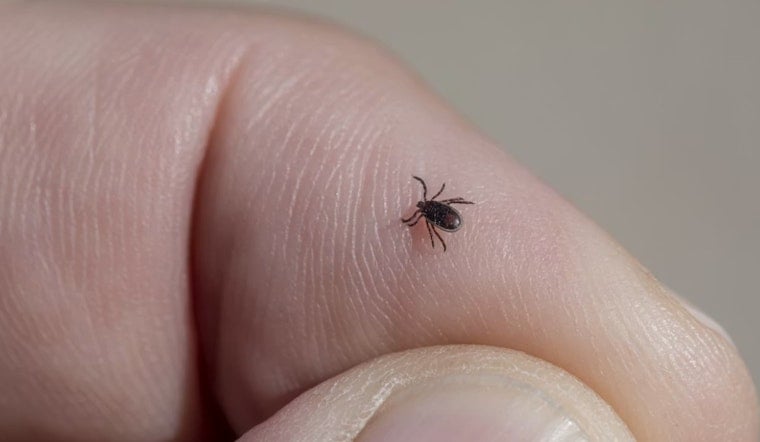
Ticks are showing up early around Marietta, and Washington County health officials say residents should treat this season like no joke. From January through May, the county logged 36 confirmed Lyme disease cases, a tally that has local health staff urging people to check themselves and their pets after any time outdoors and to keep an eye out for rashes and fevers. Area clinics say that quick checks and prompt treatment typically head off the most serious complications.
The case count was first reported by the Marietta Times, which spoke with Sherry Ellem, administrative director for the Washington County Health Department. Ellem explained that the department tracks Lyme disease cases and works with state health authorities on investigations. According to that report, the 36 cases cover the period from January through May, and officials are pushing prevention tips out through community partners. They are also telling anyone who develops a spreading rash or fever after outdoor exposure to call a healthcare provider right away.
Nationally, the Centers for Disease Control and Prevention warned in April that emergency room visits for tick bites are currently at their highest level for this time of year since 2017. The agency estimates that about 31 million Americans are bitten by ticks each year and that roughly 476,000 patients are treated annually for Lyme disease. Its guidance stresses removing attached ticks within 24 hours when possible and using EPA-registered repellents and permethrin-treated clothing in wooded or brushy areas. Public health experts note that those simple steps can sharply cut the odds of infection.
Why state numbers have climbed
Across Ohio, Lyme disease has been rising fast. State surveillance data show reported cases jumping from only a few dozen in 2010 to nearly two thousand by 2024, a trend highlighted by Ohio University and state figures. Researchers point to an expanding tick range, warmer winters, and more people spending time where ticks live as drivers of that increase. The spike has been concentrated in eastern and southern Ohio counties, which local officials say helps explain the recent uptick in Washington County.
What local health departments recommend
The Mid-Ohio Valley Health Department is urging residents to treat tick checks like part of the daily routine. On its guidance page, the department recommends inspecting clothing and gear after coming indoors, treating items with products that contain 0.5% permethrin, and performing full-body checks after spending time outside. Officials say to pay special attention under the arms, behind the knees, around the waist, and in the hair, and to shower as soon as possible after outdoor activity to wash off ticks that have not yet attached. These basic steps are aimed at stopping nymphal ticks, the tiny life stage most likely to spread Lyme, before they have a chance to embed.
Across the river, the West Virginia Office of Epidemiology and Prevention Services notes that Lyme disease is the most commonly reported tick-borne illness in that state. The office lists fever, headache, chills, muscle aches, and rash among the key symptoms residents should watch for. It emphasizes that early antibiotic treatment is effective at preventing serious complications. State and local health officials on both sides of the river also advise saving removed ticks in a sealed container, when possible, so clinicians can identify the species and better assess the level of risk.
How to protect yourself now
For people in Marietta and neighboring communities, the current message is straightforward: cover up, use an EPA-registered insect repellent, treat clothes and gear according to label directions, check pets, and do a thorough body check every day during tick season. Removing any attached tick as soon as you spot it, ideally within 24 hours, can significantly lower the chance of Lyme infection, according to CDC guidance. Anyone who notices a spreading erythema migrans rash, fever, or flu-like symptoms after a possible tick bite should call a healthcare provider, since early antibiotic treatment usually leads to a full recovery. Local health departments say they will keep a close eye on case numbers as the season unfolds and will share updates if the trend changes.





