

























































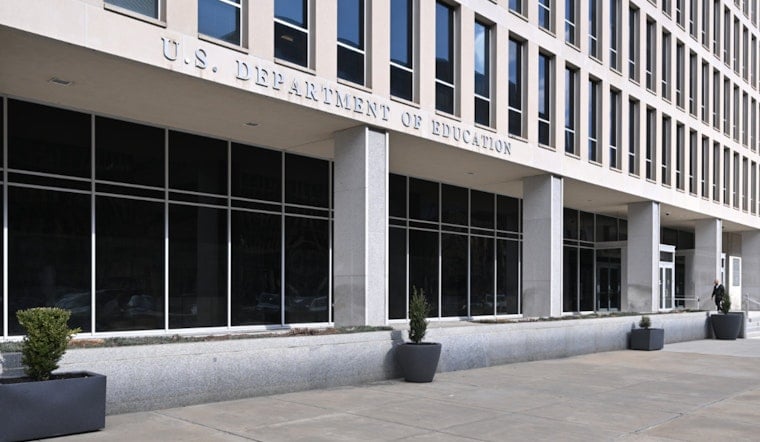
WASHINGTON — In a major shakeup of how the federal government polices schools, the Trump administration on Tuesday signed a set of new interagency agreements that shift day-to-day oversight of special education to the Department of Health and Human Services and move much of civil-rights enforcement in schools to the Department of Justice. Administration officials are pitching the move as a way to cut red tape and place programs in agencies they say are better suited to run them, while disability and civil-rights advocates warn the changes could make enforcement more confusing and weaken protections for students.
The U.S. Department of Education announced four new interagency agreements on June 16 that it says will deepen its partnerships with HHS and DOJ and build on 10 earlier agreements signed over the past year, according to the U.S. Department of Education. Department fact sheets describe HHS as providing support to the Office of Special Education and Rehabilitative Services (OSERS), while DOJ will partner with the Office for Civil Rights (OCR) on evaluation, investigations, resolutions and student-privacy work.
"As we scale back federal micromanagement when it hinders success, we are equally committed to bolstering the efficacy of federal oversight where it is essential," Education Secretary Linda McMahon said in a written statement, as reported by The Washington Post. Officials say the Department of Education will retain its statutory authorities while DOJ and HHS assume many of the day-to-day functions, with specifics on staffing and timelines left to further interagency planning.
The Associated Press reported that DOJ will evaluate, investigate and help resolve civil-rights complaints referred by OCR and will also take the lead on student-privacy enforcement under FERPA. HHS would administer grants and programs connected to the Individuals with Disabilities Education Act. Legal experts and advocates told the Associated Press that splitting these tightly linked responsibilities across multiple agencies could leave families bouncing between systems as they try to get problems resolved.
Reaction from advocates
Advocacy organizations did not hold back. The American Association of People with Disabilities called the transfers "unlawful" and urged the administration to reverse course, arguing that federal law requires these protections to remain rooted in the Education Department, according to AAPD. Other groups, including The Arc and the Education Trust, warned that the change risks reframing disability issues from an education matter to a medical one and could disproportionately hurt students from historically underserved communities.
What families should know
For now, officials insist that the basic process for families is unchanged. The department says that filing OCR complaints, maintaining IEPs and 504 plans, and accessing technical assistance will continue as before, and that the Education Department will keep responding to audits and issuing final determinations, according to its fact sheets. Officials also told reporters that OCR staff will remain available to provide updates on existing cases while DOJ and HHS work through the implementation details.
Legal questions and next steps
Legal challenges are already on the horizon. Disability advocates argue that only Congress can move offices that are mandated by statute out of the Department of Education and have signaled they may sue, the AAPD statement said. Federal guidance and legal analyses note that interagency agreements can shift how programs are administered but cannot change the underlying statutes, a limitation explained in Government Accountability Office guidance on appropriations and transfers.
What to watch
Expect the microscope to come out quickly. Civil-rights and disability groups are openly talking about possible litigation, and some lawmakers have promised to press for answers in hearings. The announcement is the latest move in a broader administration effort to relocate Education Department functions into other agencies, a pattern that has already drawn criticism from congressional Democrats and education groups, The Washington Post reported.





