

























































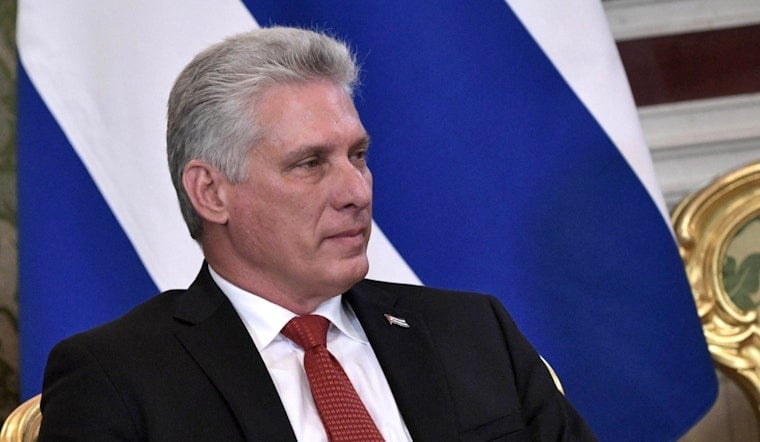
The U.S. Treasury has added Cuban President Miguel Díaz‑Canel to its sanctions list, a sharp new move in Washington’s long‑running effort to squeeze Havana’s ruling circle. The decision lands as Cuba is already wrestling with fuel shortages, rolling blackouts and a tourism industry that has been bleeding foreign business ties for years.
A Treasury filing lists Díaz‑Canel alongside his wife, Lis Cuesta, and three other individuals, including Alejandro Castro Espín. The development surfaced first in local coverage from KSAT, which pointed readers to the sanctions posting. The Associated Press has since outlined how the listing fits into Washington’s broader pressure campaign.
What the designation does
When the Treasury’s Office of Foreign Assets Control adds someone to its sanctions list, any property or interests in property that person has inside the United States is blocked. U.S. persons are generally barred from doing business with them, according to the agency’s Cuba sanctions guidance. The effect often goes further, since banks and companies in other countries may back away too rather than risk trouble with U.S. regulators.
Part of an intensified U.S. push
The move follows a May 1 executive order that expanded the administration’s authority to target Cuban officials and pieces of the Cuban economy, according to a fact sheet from the White House. Sanctioning Díaz‑Canel comes on the heels of earlier steps this spring, including fresh OFAC listings and the U.S. indictment of former leader Raúl Castro announced this month, that together have tightened Washington’s economic leverage over the island, as covered by The Washington Post.
How this hits the island and South Florida
The sanctions arrive on top of new financial turbulence. Cuba’s central bank recently said a foreign payments partner had scaled back operations and that Visa and Mastercard transactions would be suspended starting June 6, a shift that Reuters reports could strip even more hard currency from the already fragile tourism sector.
Across the Florida Straits, business and community groups in Miami say tighter banking and remittance channels are likely to echo through local households and storefronts. An earlier look at the evolving rules warned that Miami's money pipeline was already on notice.
Cuban government response
Officials in Havana have condemned the latest sanctions as pure political pressure. Díaz‑Canel called the U.S. moves “a political maneuver, devoid of any legal basis” and accused Washington of fabricating a pretext for aggression, according to reporting in The Washington Post. Cuban authorities also tie the broader pressure campaign, including energy and shipping restrictions, to the country’s severe blackouts and basic shortages.
Legal and diplomatic stakes
Putting a sitting head of state on a sanctions list carries tricky legal and diplomatic implications. Any U.S. assets are frozen, and non‑U.S. firms can face secondary sanctions in some circumstances if they keep doing certain kinds of business with designated people. That kind of risk makes any quick thaw in relations much harder.
The step lands alongside high‑profile criminal actions, including the indictment of Raúl Castro, signaling that Washington is pairing courtroom strategy with financial pressure to try to force change, as reported by The Associated Press.
For Miami and other U.S. cities with large Cuban communities, the designations are being watched for both economic fallout and political symbolism. Officials in Washington and Havana are trading moves in quick succession, and the coming days will show whether this latest round of listings deepens Cuba’s isolation or nudges either side toward a recalibrated approach.





.jpg)