

























































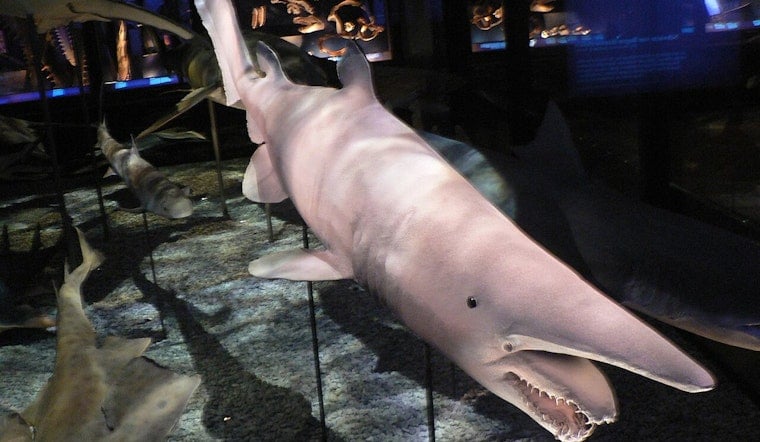

CC BY-SA 3.0, Link
Scientists at the University of Hawaiʻi at Mānoa have logged what they say are the first published live observations of the elusive goblin shark in its natural deep-sea hangout, thanks to two hard-won camera recordings that push the species far deeper and farther into the central Pacific than anyone had on the books. One shark showed up in archived remotely operated vehicle footage near Jarvis Island from 2019, while another appeared in 2024 on the slope of the Tonga Trench. In both clips, the animals are seen moving and feeding in situ, a rare treat for a species usually known from unlucky individuals hauled up by fisheries.
The findings are laid out in a brief communication in the Journal of Fish Biology, which walks through the two in-situ encounters and the gear used to capture them. According to Journal of Fish Biology, the authors are pushing for more remote-video surveys to pin down where goblin sharks actually like to live and to sharpen future conservation assessments.
Where and how the sightings were recorded
The Jarvis Island sighting turned up in archived video from the Ocean Exploration Trust’s ROV Hercules during a 2019 cruise, while the Tonga Trench encounter came in 2024 from a baited bottom-lander dropped from the R/V Dagon during the Inkfish Open Ocean Expedition, according to a University of Hawaiʻi at Mānoa release on the SOEST website. Teams from UH and Minderoo-UWA independently annotated each recording, then combined their notes for the paper, turning scattered deep-sea cameos into a coherent case study.
Depth records and why they matter
Lead author Aaron Judah said the Tonga Trench shark showed up "nearly 700 meters deeper than this species was known to live," a reminder of just how much of the deep ocean is still a blank spot on the biological map, as reported by Maui Now. The study notes that the Tonga sighting also pushes the known depth record for the entire shark order Lamniformes by roughly 108 meters, per the Journal of Fish Biology. The goblin shark itself is the last surviving member of its family, a lineage that stretches back about 125 million years, according to Britannica.
What the discovery means
Researchers say these twin deep-sea cameos show how a mix of archived video and targeted baited-camera surveys can suddenly reveal species that usually stay out of sight and, in the process, nudge management priorities. As reported by Phys.org, extending the goblin shark’s known range across the central Pacific means regional managers can now factor the species into biodiversity lists where it had never officially appeared. The authors are calling for more remote camera deployments along seamounts and trench slopes to figure out how often these sharks show up and what they might be doing in deep-sea food webs.
Video and still images from both encounters are publicly archived through partner projects. The 2019 Hercules footage is hosted in the Ocean Exploration Trust archives, while SOEST provides media and commentary for the 2024 Inkfish clips. For imagery and media materials, see the University of Hawaiʻi SOEST release and the Ocean Exploration Trust archive.




