

























































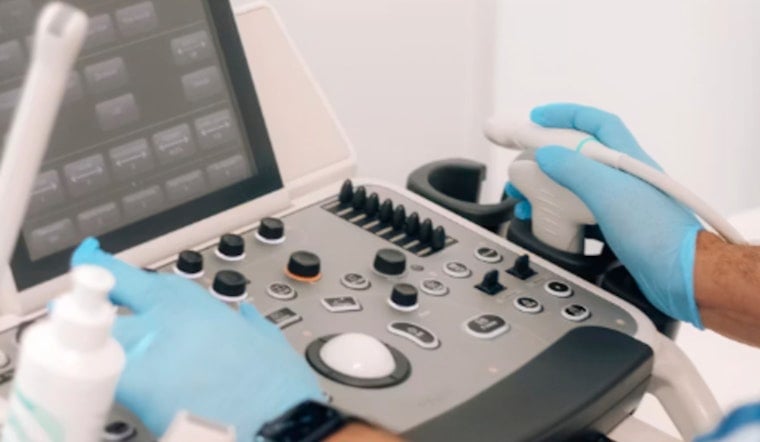
A team at the University of North Carolina has shrunk prenatal ultrasound into a pocket setup they hope can spare pregnant patients in rural North Carolina some serious windshield time. The system pairs a handheld probe with a tablet and the FAMLI app, which walks first‑time users through quick “blind sweeps” of the abdomen. The software then analyzes the video and spits out basics like gestational age and whether there is more than one baby on board. After trials overseas, researchers are now testing the tool in rural parts of the state as a lower‑friction way to bring simple, high‑value scans closer to home.
Why access matters
Access is not a minor detail here. More than a third of U.S. counties have no maternity services at all, leaving roughly 2.3 million women of reproductive age without nearby obstetric care, according to March of Dimes. That kind of gap means longer trips and more logistical hurdles for routine prenatal visits. Federal figures also show the national maternal mortality rate, which spiked during the pandemic, has come down from its 2021 high, though wide racial and age disparities persist, per CDC data. Against that backdrop, UNC researchers argue that bringing basic imaging directly into clinics could reshape care in places where a standard dating scan still means a major drive.
How the system works
The setup combines a small, battery‑powered ultrasound probe with the FAMLI app on a tablet. Simple on‑screen animations coach users through several short sweeps across the belly and record 10‑second video clips, according to News & Observer. Each of those “blind sweeps” captures hundreds of frames. The AI then combs through the images and returns five core metrics: gestational age, estimated fetal weight, twin detection, an assessment of amniotic fluid, and fetal position. The whole design is built so that someone who is not a trained sonographer can collect usable images, with the intent of triaging patients and flagging high‑risk cases for full follow‑up scans rather than replacing comprehensive imaging.
How accurate is it?
In formal testing, the blind‑sweep approach held up surprisingly well against standard ultrasound exams. A clinical study in JAMA reported that novice users in North Carolina and Zambia produced AI‑based gestational age estimates with a mean absolute error of 3.2 days, compared with 3.0 days for credentialed sonographers using traditional biometry. About 90.7% of the AI readings landed within seven days of the reference standard, versus 92.5% for conventional measurements. The authors concluded that those numbers support using the tool to guide basic prenatal decisions in places where traditional imaging is hard to access.
Industry push and price
The idea is already starting to migrate from academic paper to product. Butterfly Network announced in March that it had secured FDA clearance for a blind‑sweep gestational‑age feature built on deep‑learning models from Dr. Jeffrey Stringer’s group, according to Businesswire. The company says its model was trained on millions of images and that the software has begun rolling out in some global programs.
On the hardware side, handheld probes that plug into phones or tablets typically run a few thousand dollars, while many cart‑based hospital systems list around $50,000 to $100,000, according to market pricing guides such as TodoPocus. That kind of price gap is what gives small clinics a shot at offering basic scans instead of sending every patient to a distant imaging center.
What’s next for North Carolina
Stringer and his colleagues are piloting the UNC system in rural clinics and hope to see it move into broader use. Wider adoption across the United States will still hinge on regulatory clearance and on local health providers agreeing to bring it into their workflows, News & Observer reports. The team has tapped commercialization grants to continue testing and to support the FDA process, and they say the tool is being designed to mesh with existing telehealth services and mobile‑clinic models that already reach underserved counties. If regulators and insurers come on board, clinics could use the scans to triage patients locally and cut down on long drives for routine checks.
“The ultrasound is one of the most important diagnostic things that we do in pregnancy,” Dr. Jeffrey Stringer told News4JAX. Researchers emphasize that the AI‑guided probe is not meant to replace full prenatal care, but to deliver timely, critical information in clinics that currently have to send patients on hours‑long trips. For now, it is up to local health systems and funders to decide how quickly community sites will adopt the technology, but the ongoing pilots suggest that AI‑assisted scans are already stepping out of the lab and into real‑world front‑line practice.





