

























































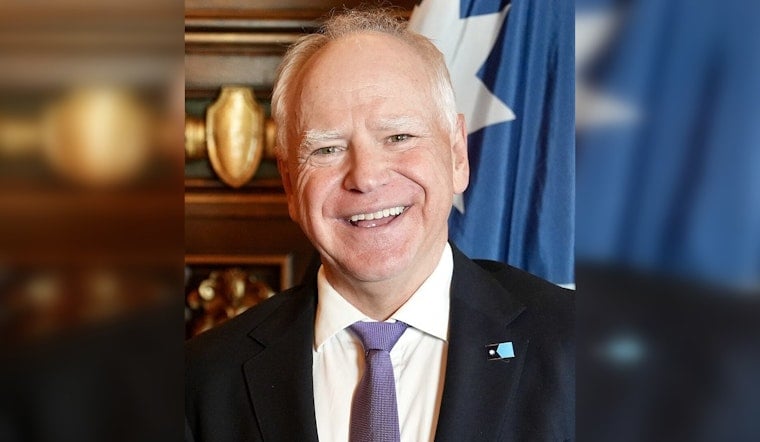
Gov. Tim Walz has unleashed a barrage of 16 Freedom of Information Act requests this week, hunting for federal records his office says could show whether the Trump administration coordinated a campaign of retribution against Minnesota. The requests home in on internal communications and documents tied to Operation Metro Surge, along with other federal actions that shook neighborhoods and triggered lawsuits and protests. It is the latest turn in a months-long clash between state leaders and federal agencies.
In a press release from the Office of Governor Tim Walz and Lt. Governor Peggy Flanagan, the governor's office said it submitted the FOIA filings on June 23 to multiple federal agencies. The stated goal is to "disclose the extent of Trump’s retribution campaign against Minnesota" and pull together records that could clarify how and why federal officials made certain decisions.
The requests, according to CBS Minnesota, seek records generated since President Trump’s second term began that include words such as "Minnesota," "Walz," "reckoning," "retribution," "punish" or "Democrat." Walz aides say that wide keyword net is meant to scoop up internal memos, planning documents and communications that might reveal political motives.
Walz Cites Lawsuits and Funding Freezes
Walz's office points to a string of federal moves, including subpoenas issued in January, lawsuits and freezes of federal funding, as examples of what it argues amounts to political targeting of Minnesota, as reported by the Pioneer Press. "Minnesotans have lived through a coordinated campaign of retribution from the Trump administration," the governor's statement said.
Judge Described Subpoenas as Retaliatory
On June 22, U.S. District Judge Patrick Schiltz quashed several grand-jury subpoenas aimed at Walz and other state and local officials, finding their "dominant purpose" was to "coerce Minnesota officials into assisting the federal government with enforcing civil immigration law and to harass and retaliate against them for failing to do so," according to the AP. Walz and other officials have described the ruling as a vindication.
Operation Metro Surge and Presidential Rhetoric
The FOIA push lands against the backdrop of Operation Metro Surge, a large federal immigration deployment to the Twin Cities that began in December 2025 and led to protests, civil-rights lawsuits and local litigation, as documented by MPR News. In January, President Donald Trump posted that "the day of reckoning & retribution is coming" for Minnesota, a message widely reported in national media and cited by critics as evidence of political rhetoric, per Al Jazeera.
What Comes Next
Under federal FOIA rules, agencies usually have 20 business days to issue an initial determination on a request and can take a one-time 10-day extension for "unusual circumstances," the Department of Justice notes. In reality, complex requests that require wide-ranging searches across multiple agencies often take months, and decisions to withhold documents can be appealed or litigated.
Walz has said the FOIA campaign is meant to build a public record and give Minnesotans answers about what has occurred. Whether the documents ultimately back up claims of a coordinated retribution campaign depends entirely on what federal agencies turn over. For now, the fight that has played out in streets and courtrooms is shifting into federal offices and could set the stage for fresh legal battles.


