

























































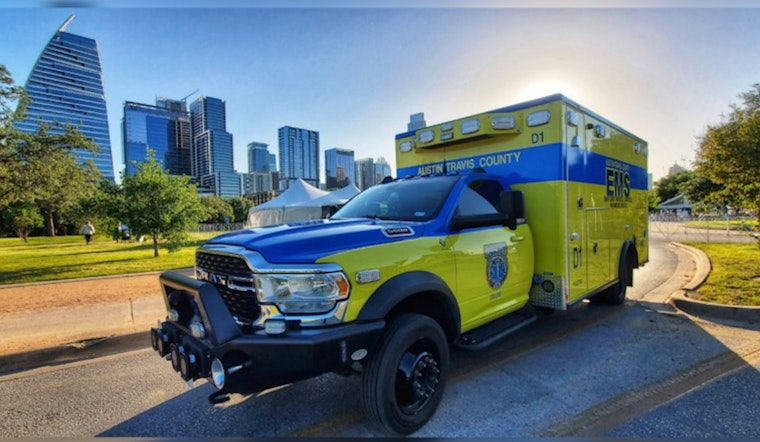
Austin-Travis County Emergency Medical Services is in a race against the clock to hire and train more medics as calls surge across West Travis. Even with record interest in its academies, the department is still staring at roughly 100 open positions, and overtime is chewing up a growing slice of the personnel budget. Local EMS leaders say those vacancies make it tougher to add ambulances and expand service in fast-growing suburbs like Bee Cave and Lakeway. Their bet is that bigger academy classes and new school-to-career pipelines will finally start to ease the crunch later this summer.
As of May 27, ATCEMS was operating with about 107 vacancies, ATCEMS chief of staff Wesley Hopkins told Community Impact. That staffing gap has pushed overtime up across the department and limited leaders’ ability to add new ambulances. “It’s hard for us to say, ‘hey, we need another ambulance over here,’ when we’re apparently struggling to staff the ones that we already have,” James Monks, president of the Austin EMS Association, told the outlet.
Operations data underline the shortage
In its FY26 Q1 presentation to the city’s Public Safety Commission, ATCEMS reported an authorized sworn strength of 714 and roughly 105 sworn vacancies as of Dec. 31, 2025, reflecting a multi-year shortfall according to the department’s presentation. The document details a recruitment and retention plan that leans on expanding academy capacity, restoring national recruiting and streamlining onboarding in order to cut down on overtime. Those moves form the backbone of ATCEMS’ short and mid term effort to stabilize field staffing.
Recruiting pipeline grows
Since January the department has logged a record 461 applications for its academy, Hopkins told Community Impact. In May, 33 cadets graduated, nearly double the department’s December class, and about 50 more are expected to start in July. The outlet also reported that ATCEMS lost the chance at more than $2.5 million in funding for ambulances and staff when voters rejected Proposition Q, which tightened near term options for growth. Hopkins said he expects nearly half of current vacancies to be filled once the July academy wraps, but warned that training throughput and credentialing remain real bottlenecks.
Schools and partnerships aim to widen the pipeline
Austin Community College and regional partners launched the Central Texas Healthcare Academy in May to give high school students a dual credit pathway into nursing, paramedic and allied health careers, backed by philanthropic and employer support, ACC said. The academy is structured so students can earn industry credentials while still in high school, then move directly into ACC’s paramedic pathway, a setup officials hope will steadily expand the local supply of EMTs and paramedics.
Budget constraints linger
Voters rejected Proposition Q in November, a tax rate election that would have added about $110 million to the city budget, and ATCEMS leaders say that decision narrowed their near term options and forced pauses on some planned program expansions, KUT reported in December. Under the revised budget the city earmarked additional overtime funding to keep coverage intact, but officials and advocates argue that relying on overtime is not a viable long term strategy. Filling vacancies, they say, is the only durable way to curb overtime and grow services.
Why growth matters
Travis County’s population has climbed in recent years, with the U.S. Census Bureau estimating about 7.7% growth since April 1, 2020, according to U.S. Census Bureau QuickFacts. That demographic pressure, paired with sprawling development patterns on the west side of the county, helps explain why some neighborhoods are seeing heavier call volumes at times when resources are already stretched thin.
ATCEMS leaders and association advocates say the current hiring push, larger academy classes and the new school-to-career pipeline are all steps in the right direction, but they caution that the staffing picture will not flip overnight. For West Travis residents the hope is that fresh recruits finishing training, combined with a stronger long term pipeline, will translate into steadier coverage and fewer overtime-driven gaps by the fall.





