

























































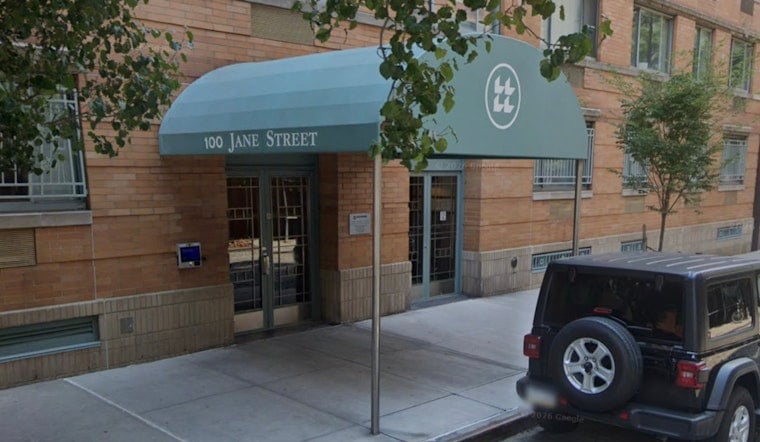
JLL Capital Markets has arranged a roughly $69.5 million refinance for the fully occupied multifamily building at 100 Jane Street in Manhattan’s West Village on behalf of Rockrose Development. The new financing is structured as a 10-year, fixed-rate loan through Freddie Mac and will be serviced by JLL Real Estate Capital, LLC. The deal secures long-term capital for the nine-story rental property while keeping Rockrose in place as both owner and manager.
Deal details
According to Yield PRO, the nine-story building at 100 Jane St. totals about 100,000 rentable square feet and contains 148 units, broken out as 117 market-rate apartments, 30 affordable units and one superintendent unit. Property listings and public records list the building as completed in 1996 and managed by Rockrose, per Apartments.com.
The team behind the loan
JLL reports that its debt advisory team on the assignment was led by Senior Managing Directors Geoff Goldstein and Steven Klein, along with Managing Director Michael Shmuely. "With no large-scale multifamily product in the West Village submarket under construction or scheduled for delivery in the next five years, 100 Jane is poised to benefit from continued demand in the rental market," Goldstein said in the release reported by Yield PRO. JLL's capital markets platform will also have loan servicing performed by JLL Real Estate Capital, LLC, a Freddie Mac Optigo lender, according to JLL Capital Markets.
Market context
Industry trackers continue to show Manhattan's multifamily market running tight, with vacancy generally hovering below 3% and sustained renter demand keeping fundamentals solid. Coverage and local market reports from outlets such as Forbes and market briefs like the Q1 report from Ariel Property Advisors highlight tight supply and slower new starts, conditions that make stabilized, transit-proximate assets appealing to lenders.
What it means for the neighborhood
For residents at 100 Jane, the refinance is not expected to alter day-to-day management, as Rockrose remains the sponsor and operator of the building, according to city property registrations compiled by RentHistory.org. For investors and lenders, the transaction signals that capital is still available for well-located, stabilized multifamily properties in core Manhattan submarkets even as new construction remains constrained.



