

























































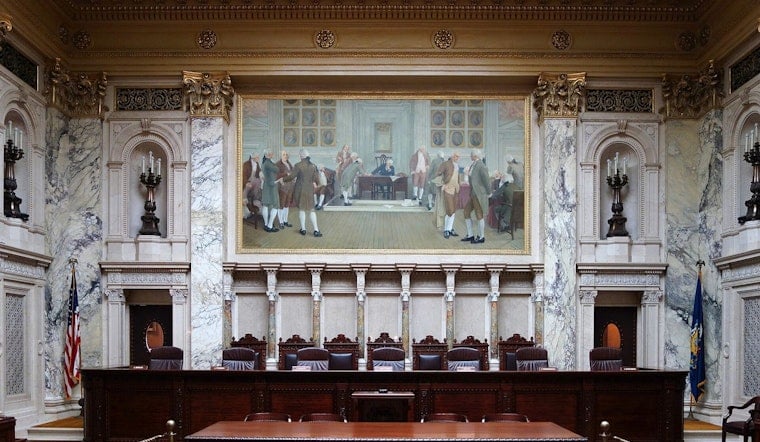
The Wisconsin Supreme Court on Thursday unanimously struck down a decades-old state grant program that targeted certain students of color, ruling that it violates the Equal Protection Clause and ordering the Higher Educational Aids Board to stop running it.
What the court said
Chief Justice Annette Ziegler wrote the majority opinion, concluding that taxpayers had standing to sue and that the grant program crossed constitutional lines under the Fourteenth Amendment. "We conclude that the Taxpayers have standing and that the Grant Program violates the Equal Protection Clause of the Fourteenth Amendment," the opinion stated, according to Wisconsin Public Radio.
Program history and scale
The Minority Undergraduate Retention Grant dates back to the 1985-87 biennial budget and was designed as a modest, need-based aid program. It offered minimum awards of $250 and maximums of $2,500 per year to groups defined in state law. According to the Higher Educational Aids Board's 2024-25 annual report, 757 students received grants in that year, and the report details allocations, average award amounts, and outcomes for recipients.
Who brought the case and reaction
The lawsuit was filed in 2021 by the Wisconsin Institute for Law & Liberty on behalf of taxpayers who argued that the program unlawfully used race to distribute public dollars. In a victory lap of a statement, the group labeled the decision a "major win" and added, "Race cannot be used to dole out scholarships and other financial aid," as reported by Urban Milwaukee.
Why the U.S. Supreme Court matters
The state justices leaned heavily on the U.S. Supreme Court's 2023 Students for Fair Admissions decision, which sharply restricted when government entities may consider race in higher education settings. That ruling served as the backbone of the Wisconsin court's analysis; see the controlling precedent in the U.S. Supreme Court for the underlying opinion.
Legal fallout and what’s next
Because the order enjoins HEAB from operating the grant program, colleges and technical schools that received allocations will need immediate direction on how to handle funds they expected to pass along to students, or how to replace them. Students who had counted on the grants will be looking to financial-aid offices for answers. Supporters of the program have filed briefs arguing that it improves retention and completion rates, and organizations that submitted amicus briefs laid out those findings in court filings and public materials, including a Law Forward brief highlighted in a press release posted to Urban Milwaukee.
Bottom line
The ruling wipes out a relatively small but tightly targeted pot of aid that helped roughly 750 students and totaled about $440,000 in recent years, according to state reporting. For now, HEAB is barred from operating the program, and students who relied on those awards will be waiting to hear whether the board or lawmakers can craft any replacement, according to the Higher Educational Aids Board's 2024-25 annual report.





