

























































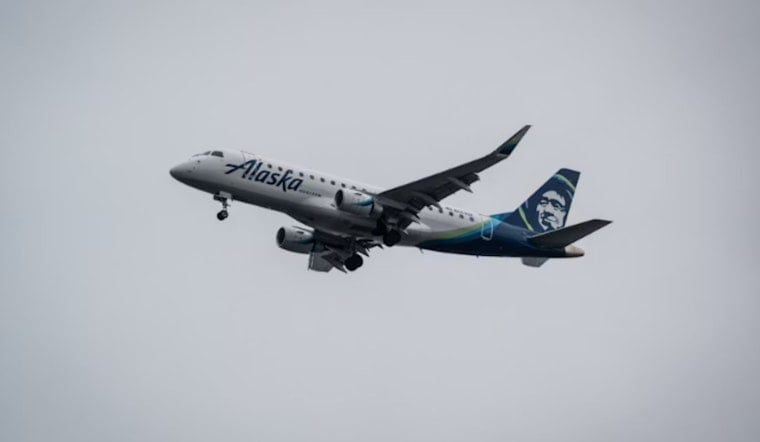
An Alaska Airlines Boeing 787-9 on the carrier’s new Rome to Seattle nonstop was forced to turn back on Sunday after an in-flight emergency, returning to Rome’s Leonardo da Vinci–Fiumicino airport for a safe landing. Passengers were taken off the aircraft, and the airline said it was working to reaccommodate travelers. There were no immediate reports of injuries.
Roughly two hours after departure, the jet abandoned its transatlantic crossing, made a sharp U-turn over the southeastern U.K., and began descending back toward Italy. Flight-tracking data from Flightradar24 show the abrupt reversal and return to Rome, while Aviation Today reported that the crew declared a general emergency while cruising. The aircraft later entered holding to lose weight before landing back at Fiumicino without further incident.
Alaska’s own flight-status page lists the disrupted trip as Flight 181 and identifies the aircraft as a 787-9, tail number N780HA, on the Rome leg, according to Alaska Airlines. The carrier said it is working to reaccommodate guests affected by the diversion. Aviation outlets reported that emergency services were standing by at Fiumicino as a precaution while the jet underwent post-landing checks.
What Officials And Trackers Are Saying
Aviation Today noted that Alaska had not initially provided a detailed technical explanation for the diversion. Other coverage, including reporting from Geo.tv, stated that the crew saw an engine-vibration indication. As is standard in these cases, airline maintenance teams and local aviation authorities are expected to inspect the aircraft before it returns to service.
Why Crews Sometimes Dump Fuel And Squawk 7700
The widebody reportedly entered a holding pattern to get down to a safe landing weight by burning or jettisoning fuel, a common move for long-haul jets that need to return soon after takeoff. Explainers from Flightradar24 note that crews follow strict procedures when dumping fuel, including designated altitudes and areas to minimize impact, and that pilots set their transponder to 7700 to signal a general emergency and secure priority handling from air traffic control. The FAA’s air-traffic guidance defines Code 7700 as the standard alert to controllers and ground emergency services that an aircraft is facing an in-flight emergency.
Alaska arranged a replacement departure later that evening, and the affected jet is expected to undergo engineering inspections before returning to regular operations. Aero News Journal reported that the airline moved quickly to reaccommodate passengers while maintenance teams examine the aircraft and local authorities review what happened.





