

























































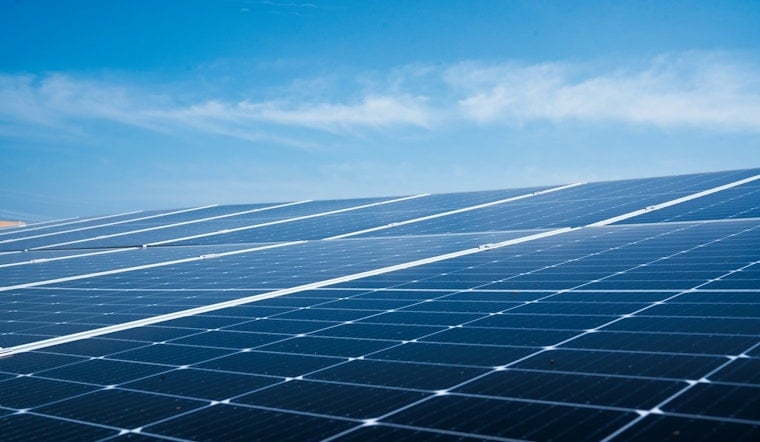
NYSERDA is putting its cards on the table, rolling out a pair of reports that sketch out how New York plans to lean hard on solar, storage and targeted transmission while trying to keep the lights on as electricity demand climbs. The agency argues that moving distributed resources onto the grid faster, paired with carefully chosen transmission upgrades, can knock down costly peak demand and bolster reliability at a moment when grid operators are warning that reserve margins are getting uncomfortably thin as older plants retire and new, energy-intensive facilities plug in.
Doreen Harris, NYSERDA’s president and CEO, walked through the authority’s annual Accomplishments Report and its new three-year Strategic Outlook on Capital Tonight, according to Spectrum News. She framed the documents as both a scorecard of measurable progress and a playbook to help guide the State Energy Plan, saying NYSERDA is zeroed in on practical moves that trim costs for consumers while speeding up clean energy deployment.
Inside NYSERDA’s Game Plan
According to NYSERDA’s strategic outlook, more than 6 gigawatts of distributed solar are now operating statewide, and those projects helped avoid roughly $92 million in peak-period system costs for the 2024–2025 capability period. The outlook also lays out a growing pipeline of large-scale renewables, rising energy storage capacity and targeted transmission projects intended to move lower-cost power into downstate markets. Taken together, NYSERDA presents these pieces as a practical route to cleaner electricity that is also easier on monthly bills.
Why Grid Operators Are Nervous
The New York Independent System Operator has warned that retirements of conventional power plants have run ahead of new capacity additions, shrinking reserve margins just as demand trends upward. Reuters reported that NYISO has flagged about a 1.5 gigawatt net decline in supplies since 2019 and has singled out winter conditions and the rapid growth of large industrial loads as particular trouble spots. That mix heightens the risk that extreme weather or unexpected outages could force emergency measures if new supply and transmission upgrades do not keep pace.
NYSERDA’s Toolbox: More Supply, Smoother Demand
The Strategic Outlook describes a multi-pronged approach that leans on the NY-Sun program to accelerate distributed solar, expands energy storage, backs workforce and supply-chain development and pursues targeted transmission that moves low-cost renewables to the parts of the state that need them most. The report says NYSERDA is working to deliver over $1 billion in federal funding through programs administered by federal agencies to lower upfront costs and spur private investment, according to NYSERDA’s strategic outlook. The authority also underscores that technical assistance for siting and interconnection is key to cutting down project lead times.
Transmission And The Mid-Term Pressure Valve
Some of the big-ticket transmission work is already moving forward. The Champlain Hudson Power Express is a 1,250 MW buried HVDC line that is intended to bring hydroelectric power from Quebec into New York City by mid-2026, and developers and state officials say it should deliver significant capacity relief for downstate, according to a Champlain Hudson Power Express press release. At the same time, NYSERDA and NYISO both stress that while marquee projects matter, timing is everything. Solar arrays, batteries and new lines all take months or years to site, permit and interconnect, which means near-term efforts to shave peak demand and speed interconnection have to move in parallel with longer-lead transmission builds.
For New Yorkers, the message lands somewhere between cautious optimism and a reality check. Distributed solar and batteries are already showing up as measurable savings on the system, yet the state still needs faster permitting, more coordinated planning and sizeable new investment to avoid reliability gaps as electrification and large new users push demand higher. NYSERDA’s documents are pitched as a practical roadmap, not a magic wand, and the State Energy Plan and public comment process expected this year are set to outline the next specific steps.





