

























































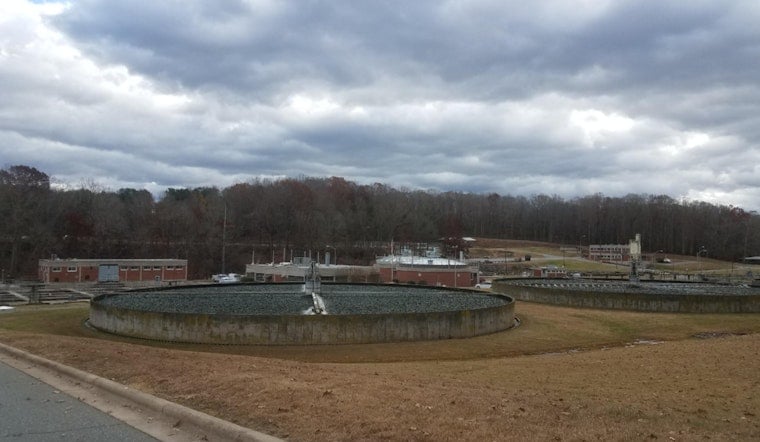
A state test has pegged the Asheboro Wastewater Treatment Plant with an eye-popping level of 1,4-dioxane, a chemical the U.S. EPA labels a likely human carcinogen. A July 10 sample clocked in at about 2,010 parts per billion in treated wastewater that pours into Hasketts Creek and then the Deep River. Using federal toxicity calculations, state regulators say the average monthly concentration considered safe for downstream drinking-water intakes is 22 ppb, which makes this reading roughly 91 times higher.
State agency issues alerts and retests
In a July 22 press release, the North Carolina Department of Environmental Quality’s Division of Water Resources said it has taken additional samples and is waiting for confirmation of the results. According to North Carolina Department of Environmental Quality, the division has notified drinking-water systems downstream, from Bladen Bluffs and Brunswick County to the City of Sanford, and plans to post updated sampling data for the Cape Fear River Basin as new results are finalized.
What is 1,4-dioxane?
The U.S. Environmental Protection Agency classifies 1,4-dioxane as a likely human carcinogen and notes that it can turn up in wastewater as an industrial solvent or as a byproduct of plastics manufacturing. Regulators are most concerned about chronic, long-term exposure through drinking water, which is the primary health risk pathway EPA tracks for this compound.
How this fits into a longer fight
This July spike is the latest chapter in a years-long battle over 1,4-dioxane pollution in the Cape Fear River Basin. Environmental groups, local governments and state officials have been locked in arguments over which industries are responsible and how tightly to control their discharges. As reported by North Carolina Health News, a lawsuit filed last year accuses industrial operations, including a PET plastics manufacturer and landfill leachate, of repeatedly driving surges of 1,4-dioxane into Asheboro’s sewer system and into downstream waterways. That case, along with related administrative rulings, has left proposed numeric pollution limits in legal limbo while regulators continue sampling and public outreach.
Who could be affected
The state’s alert lists dozens of utilities that pull drinking water from the Deep River and the larger Cape Fear system. DEQ specifically flagged public systems and several industrial users. The notice from North Carolina Department of Environmental Quality names providers including Bladen Bluffs, Cape Fear Public Utility Authority, Fayetteville Public Works Commission and the City of Sanford.
TriRiver Water, which supplies Sanford and neighboring communities and publishes monthly reports on 1,4-dioxane, has stated that its treatment plants are not currently built to remove the compound. Instead, the utility relies on monitoring data to guide operations, according to TriRiver.
How removal works and what it costs
Stripping 1,4-dioxane out of drinking water is not a simple add-on. EPA technical guidance notes that utilities generally need advanced oxidation processes, or AOPs, which pair UV light with hydrogen peroxide, ozone or similar systems. Those setups can be effective but are technically demanding and tailored to each site. The agency’s treatment manual lays out AOPs and other approaches for 1,4-dioxane removal.
Local reporting has also put a rough price tag on what a full-scale fix can look like. One comparable retrofit has been estimated at around $40 million for a community of similar size, according to North Carolina Health News and federal technical reviews.
Legal status and next steps
The timing of the discovery is awkward for everyone involved. Courts and regulators are still deciding how aggressive 1,4-dioxane limits should be in municipal wastewater permits. Earlier this year, a Wake County Superior Court judge ruled that DEQ does have the authority to write numeric limits into those permits, according to InsideClimate News. That ruling is now on appeal, and some of the limits are on hold while higher courts weigh in. Environmental advocates and some downstream utilities are pressing for tighter controls on industrial sources to cut pollution at the front end and reduce the need for expensive treatment upgrades at drinking-water plants.
What officials say and what comes next
DEQ says it will keep tracking discharges and will continue alerting water systems as new data come in. The City of Asheboro has told reporters that it is operating under its existing NPDES wastewater permit and is actively appealing numeric limits in court, while stating it plans to follow whatever final legal decision is issued, according to WRAL. Regulators and utilities say they will keep testing and sharing results with downstream communities as follow-up samples are processed.




