

























































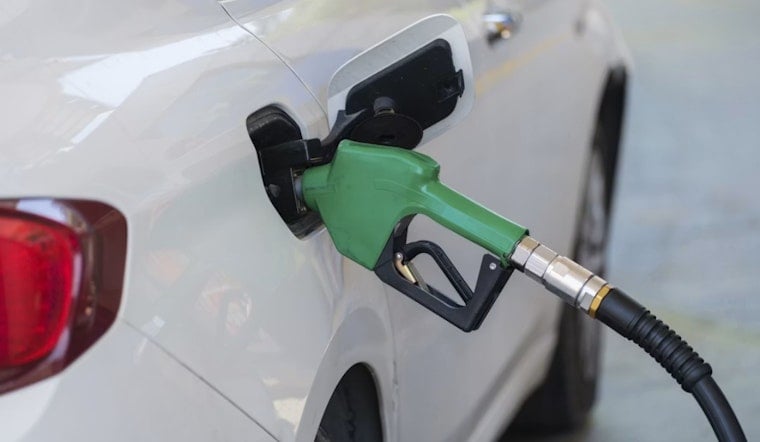
Bay Area motorists are getting hammered at the pump again, as California climbs to the top of the national price board for gasoline. In San Francisco, Oakland and San Jose, regular unleaded is stuck in the high $5 range, tightening the screws on commuters and summer road trippers.
According to AAA, California's statewide average sat at about $5.60 per gallon yesterday. The agency pegged San Francisco at roughly $5.78, Oakland at about $5.60 and San Jose at about $5.59, based on station-reported prices that have been creeping higher in recent weeks.
Supply and demand
Behind those sticker-shock numbers is a tight national fuel market. The U.S. Energy Information Administration reports that U.S. gasoline production averaged 9.7 million barrels per day last week, while motor gasoline product supplied, a common stand-in for demand, hovered near 8.9 million barrels per day. Refineries were operating at about 96% of their operable capacity, leaving very little slack in the system if anything goes wrong.
Global shocks hitting local pumps
Rising crude prices remain the biggest single ingredient in what drivers pay at the pump. In Thursday's update, AAA said national gas prices keep climbing, with crude trading in the roughly 80 to 90 dollar-per-barrel range. Independent market coverage has tied that move to renewed hostilities in the Gulf and heightened tension around the Strait of Hormuz, AP News reports.
Why California pays more
When global crude jumps, it tends to hit California harder than most. The state piles on its own costs, starting with a gasoline excise tax of 61.2 cents per gallon for the July 1, 2025 to June 30, 2026 period, according to the State Controller’s Office. On top of that, the California Energy Commission has detailed refinery shutdowns and exits from the state, along with a heavier dependence on imported blendstocks that can magnify price swings.
Put together, that mix of higher crude prices, reduced in-state refining and state-level taxes and fees goes a long way toward explaining why California averages sit well above the national norm.
What drivers can do
Drivers have limited tools, but a few habits can dull the hit to the wallet. Price-comparison apps can help locate cheaper stations, and consolidating errands, carpooling or taking transit where it makes sense can trim weekly fuel use. Some households may eventually look at an electric vehicle if the up-front cost and driving patterns line up.
For now, though, Bay Area shoppers and commuters should expect to budget a bit more per fill-up as summer demand collides with a jumpy crude market. Prices are likely to react quickly to any new moves in oil or refinery output, and future AAA and U.S. Energy Information Administration reports will show whether relief is on the way or if the pain at the pump sticks around a while longer.





