

























































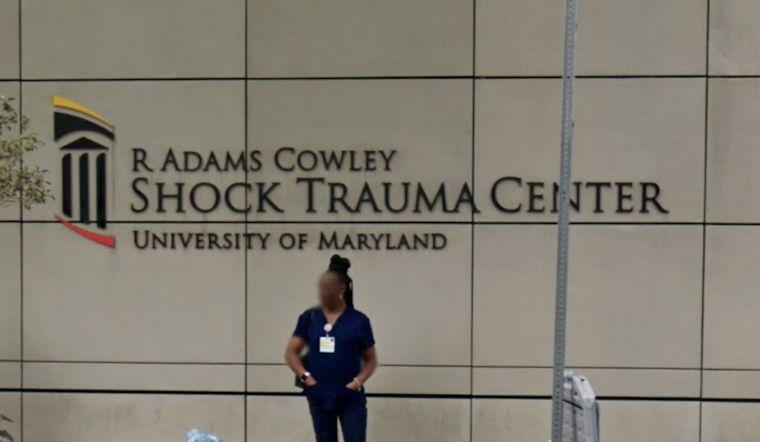
There are bad commutes, and then there is driving yourself to the hospital with gunshot wounds. That is what one man did in Baltimore, pulling up outside R Adams Cowley Shock Trauma with blood pouring from his chest before collapsing on the sidewalk.
A University of Maryland Express Care paramedic and two colleagues were already outside when the man stumbled up. Within minutes, they had him on a gurney and in an operating room. Doctors and emergency crews later said that speed likely meant the difference between life and death.
Jeremy Mayer, an Express Care paramedic with nearly a decade on the job, told reporters the man walked toward the crew bleeding heavily. Mayer and his team quickly found two penetrating chest wounds, loaded the man onto a stretcher, and rushed him through the ambulance bay straight to surgery. Hospital staff later described the operation as life-saving, and police determined the shooting happened in the 2400 block of Westport Street, with the victim driving nearly three miles to get help, according to WMAR-2 News.
Paramedics Met Him On The Sidewalk
“If he had been shot several blocks away and had waited for someone to activate the emergency system through 911, I can’t imagine that he would be alive,” Dr. Rishi Kundi, a Shock Trauma critical care surgeon, said in an interview.
Shock Trauma’s physician in chief, Dr. Thomas Scalea, called the scene “an unusual example of the Maryland trauma system in action” and praised the Express Care crew for reacting instantly and getting the man into the operating room without delay, per WMAR-2 News.
How The Trauma System Delivered Care
The R Adams Cowley Shock Trauma Center is Maryland’s primary Level I adult trauma hub, treating thousands of critically injured patients each year and serving as the central node of a coordinated statewide EMS network, according to the University of Maryland Medical Center.
The center also fields rapid response units, sometimes called the Go Team, that can bring hospital-level interventions to complicated scenes, a capability detailed by WBAL-TV 11 News. Those early interventions can shave crucial minutes off the time it takes to reach surgery.
Whether a victim calls 911, drives for help, or is spotted by a passing medic, the first minutes after an injury matter most. In this case, paramedics who just happened to be standing outside Shock Trauma turned a sidewalk encounter into a direct line to the operating room and, by all accounts, a life saved.





