

























































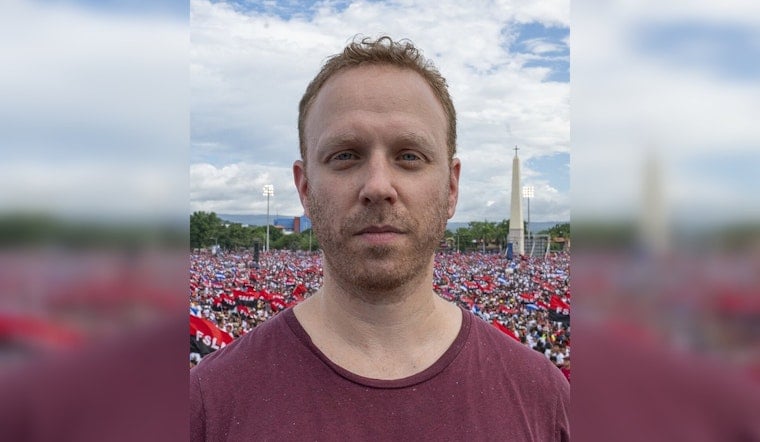
Max Blumenthal, a Boston-born independent journalist, says his return from a reporting trip to Iran turned into an unplanned stay in a back room at Washington Dulles International Airport on July 10, where U.S. Customs and Border Protection officers detained him and seized two smartphones. He says he refused to hand over passcodes in order to protect confidential sources and was held for roughly two and a half hours. His legal team has since filed an emergency request asking a federal judge to order the devices returned.
Emergency motion seeks return of devices
The American-Arab Anti-Discrimination Committee, acting on Blumenthal’s behalf, filed an emergency motion in the U.S. District Court for the Eastern District of Virginia that asks a judge to order the immediate return of both phones and any information copied from them, according to Daily Voice. The filing argues the seizure violated the First Amendment, the Fourth Amendment and the Privacy Protection Act, and it says CBP officers questioned Blumenthal about his journalism and his trip. The motion also alleges that when he declined to provide passcodes, an officer told him the devices would be “hook[ed] up to machines” to extract data.
What CBP policy allows
Customs and Border Protection policy distinguishes “basic” manual inspections from “advanced” searches in which officers connect external equipment to a device, and its public guidance says advanced searches require reasonable suspicion and approval from a senior manager. The same guidance notes that devices may be detained and that copies of information can be retained in limited circumstances, and it reports that roughly 47,000 device searches were conducted in FY2024, most of them basic manual reviews, per CBP.
Blumenthal and civil-rights groups push back
Blumenthal has said he believes the Department of Homeland Security and CBP targeted him because of his journalism, and civil-rights advocates have treated the case as a press-freedom and privacy red flag. ADC President and Legal Director Jenin Younes said, “The practice of seizing and searching a journalist’s phone or other electronic devices at the border raises grave First and Fourth amendment concerns.” Independent outlets that focus on press freedom have amplified the filing and the group’s call for the devices’ prompt return, as reported by Democracy Now!.
Legal stakes and precedent
The motion lays out both constitutional and statutory claims, and it drops into a legal landscape that is anything but settled. Federal courts are split over how far the border-search exception extends to forensic examinations of electronic devices. Congressional research and case law indicate that some courts require heightened suspicion or even a warrant for forensic-level searches, while others have allowed much broader authority at the border. That division could shape how a judge in the Eastern District of Virginia views Blumenthal’s challenge. For an overview of the competing legal standards, see a Congressional Research Service review of border searches.
What comes next
As of the filing, the court had not yet ruled on the emergency request, according to Daily Voice, and ADC asked the judge to return the phones while the agency’s actions are reviewed. A ruling for Blumenthal could narrow when agents are permitted to conduct advanced forensic examinations without stronger justification. A ruling for the government would leave existing CBP authority largely intact and would likely push the broader dispute back to appellate courts for further guidance.
Legal implications for journalists
The case raises immediate questions about how reporters’ confidential-source materials are treated at U.S. ports of entry and whether current CBP procedures give journalism any special protection in practice. Observers say the dispute could prompt additional oversight, more litigation or policy changes if courts or lawmakers conclude that current practices risk chilling protected reporting.





.jpg)