

























































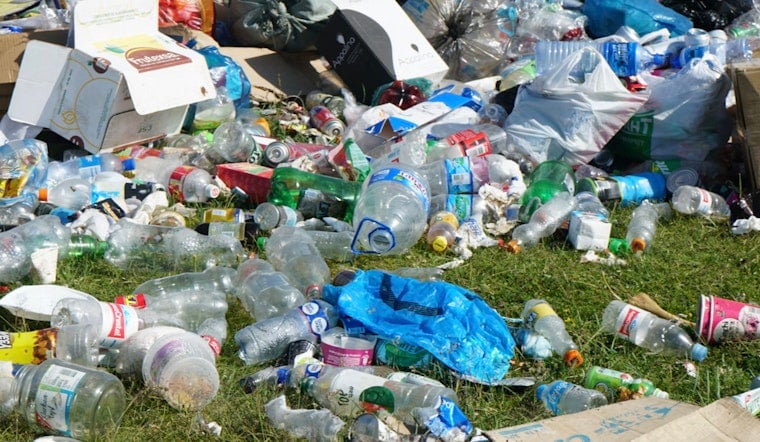
What was supposed to be a quick fix has turned into an almost yearlong headache for tenants at Clason Point Gardens in the Bronx, where a “temporary” waste yard stuffed with overflowing trash bins has taken over a parking lot and, residents say, turned it into a pest playground.
Tenants report rats, roaches and a stomach-turning stench creeping into yards, basements and walkways after it rains. Sandbagged fencing that was supposed to keep the piles contained has failed during storms, they say, leaving trash and debris spilling out. Residents want NYCHA to clear the garbage and hand the lot back to the community.
“That's why we're now overwhelmed with rats. It has to stop,” tenant Melvine Savater told reporters. Tenants told News 12 The Bronx that NYCHA originally said the setup would last about three months, but the bins have now been sitting there for roughly 11 months. Neighbors also told reporters that shreds of deteriorated sandbags clogged a nearby storm drain, which they say made flooding worse during heavy rain.
In a statement to News 12 The Bronx, a NYCHA spokesperson said the permanent waste yard at nearby Monroe Houses is undergoing modernization, and that a temporary waste yard was set up at Clason Point Gardens while that work is underway. The agency said it has added “additional rear-loader collection service” at the temporary site and “will continue to monitor this area for cleanliness,” according to the statement.
NYCHA policy and the HUD agreement
NYCHA’s Individual Waste Management Action Plans, created under a 2019 agreement with the U.S. Department of Housing and Urban Development, spell out rules for inspections, containerization and pest control at public housing sites. As outlined by NYCHA, trash is supposed to be stored or collected in ways that block pests and to be addressed at least once every 24 hours.
Tenants say the trash is part of a pattern
Residents say the overflowing waste yard is just the latest chapter in a long story of slow maintenance at Clason Point Gardens, pointing to issues like cracked sidewalks and tree hazards. Tenant leaders have already accused NYCHA of dragging its feet after a large tree crashed onto a sidewalk earlier this month, a scare they say lines up with their frustrations about the trash; see coverage of what happened after a large tree crashed onto a sidewalk earlier this month.
How collection works, and why storage matters
NYCHA uses rear-loading compactor trucks to back up regular collection when city schedules or local conditions call for extra pickups. Its own publication notes that the rear-loader program started in November 2021 to remove multiple tons of waste from developments on alternate collection days, according to NYCHA Now.
Legal and policy angle
The 2019 HUD agreement was designed in part to keep pests at bay and grounds clear, and NYCHA’s waste-management plan requires daily inspections and containerized trash storage. Per NYCHA, prolonged uncovered piles that attract vermin can be seen as lapses in those commitments and may draw attention from city and federal watchdogs.
For now, tenants say they will keep the pressure on NYCHA to remove the trash and return the lot to community use. NYCHA has told reporters the Monroe Houses project is nearing completion and that staff will continue to monitor and service the temporary Clason Point site while that work wraps up.





