

























































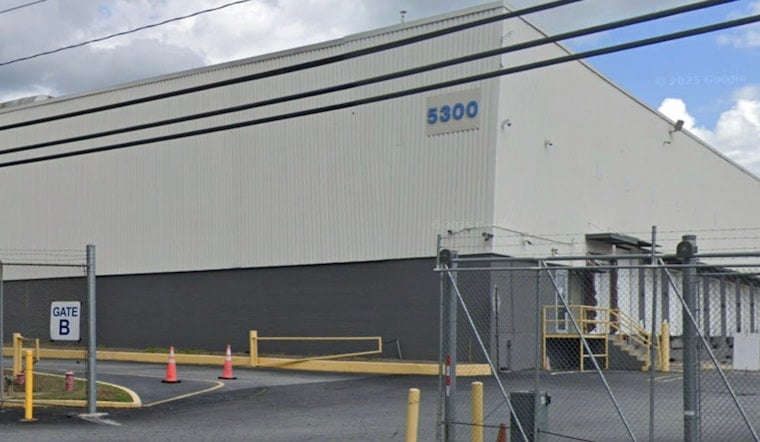
KSG, an entity led by Brooklyn-based landlord Leah Weiss, has hauled BroadRange Logistics into New York state court, claiming the third-party logistics operator pocketed an $11 million tenant-improvement allowance tied to a 600,000-square-foot warehouse in Mount Pocono and then stopped paying rent. The complaint names BroadRange, New Jersey investor Josh Malka and Mount Pocono deal attorney Rafael Berlin, asking a judge to claw back the allowance along with other damages. BroadRange has denied the allegations in court filings.
What the complaint alleges
According to The Real Deal, KSG says it bought the Poconos warehouse in 2021, then signed BroadRange to a 20-year, triple-net lease and agreed to provide an $11 million tenant-improvement allowance. That allowance was funded in part through a $32 million CMBS loan from OceanFirst Bank.
The lawsuit claims BroadRange fell behind on rent within a month and offered shifting explanations involving supposed free-rent promises and certificate-of-occupancy issues. After KSG declared the lease void, the complaint says BroadRange did not return the tenant-improvement money. KSG is suing for fraudulent inducement, unjust enrichment and breach of the implied covenant of good faith and fair dealing.
BroadRange's footprint
BroadRange, based in Forest Park, Georgia, touts on its LinkedIn profile that it operates 21 warehouses totaling more than 13 million square feet across eight states. That kind of national footprint is exactly why landlords sometimes feel comfortable fronting large tenant-improvement packages for big-name 3PL tenants.
Those allowances, however, are supposed to go into actual build-outs and are usually tied to contract protections that let a landlord claw back funds if the tenant does not hold up its side of the deal. KSG is effectively arguing that those protections were not respected here and that the allowance turned into a cash grab instead of an upfit budget.
How the middleman figures in
The complaint traces the origins of the Mount Pocono deal to New Jersey investor Josh Malka, who allegedly offered to buy the property for $37 million, put down a $575,000 deposit in June 2025 and then backed out a month later, according to The Real Deal. KSG says Malka introduced BroadRange to the landlord after that aborted purchase.
Nine days after BroadRange drew down the tenant-improvement allowance, it allegedly wired nearly $2 million to Malka’s firm, Winthrop Equities, as a commission, far above the $100,000 Malka had previously told the owner he would receive. The suit also names attorney Rafael Berlin. Rob Bergson, who represents Berlin, told reporters the allegations "have absolutely no merit."
Legal stakes
KSG is not only seeking damages. It also wants the court to void the payment to Malka as a fraudulent transfer under Georgia law, a tool that lets creditors or claimants try to pull back assets they say were shifted to put them out of reach.
Georgia's Uniform Voidable Transactions Act (O.C.G.A. § 18-2-70 et seq.) lays out how those claims work and allows courts to unwind transfers and order restitution if the statutory requirements are met. Whether KSG can actually claw back that money will likely turn on detailed discovery into bank wires, the timing of transfers and whether the people who received the funds can convince a judge they took them in good faith for reasonably equivalent value.
Broader pattern and market risk
The Real Deal notes the Poconos complaint follows at least two recent suits in other states that claim similar behavior, a pattern that could nudge lenders and landlords to tighten how they vet large tenant-improvement payouts. Market data from Cushman & Wakefield show Northeastern Pennsylvania has stayed a busy industrial corridor, which can push owners to offer aggressive concessions to land big warehouse tenants.
If courts bless landlords’ efforts to recover funds in cases like this, underwriters and owners may respond by insisting on tighter escrow language, clearer step-in rights or larger holdbacks tied to construction milestones. The case is still in its early stages and is likely to spawn motions to dismiss and bruising discovery fights over contracts and wire transfers.
For now, though, the lawsuit stands as one of the clearest signs that warehouse owners are pushing back on how some logistics tenants and dealmakers are structuring incentives. How this plays out could reshape how large warehouse leases and eight-figure tenant-improvement checks are negotiated across the sector.



