

























































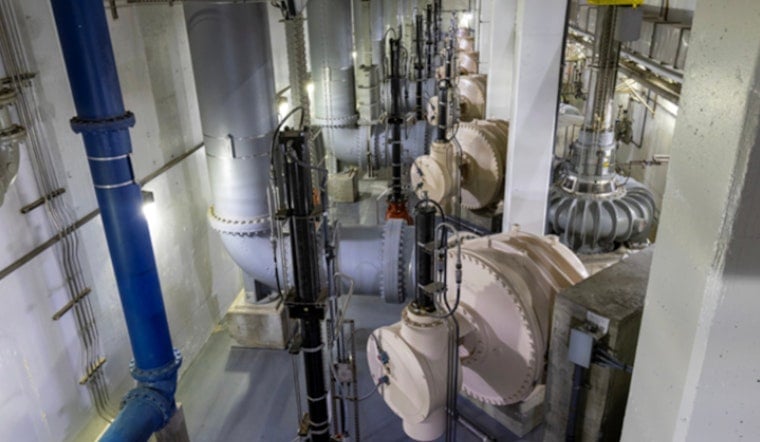
Brooklyn’s oldest sewage plant just got a very expensive reboot. A $155 million modernization at the Coney Island Wastewater Resource Recovery Facility replaces aging pumping equipment, cuts electricity use by 20 percent and keeps a crucial South Brooklyn system ready for the next storm.
A Five-Year Overhaul Without Shutting Down
The New York City Department of Environmental Protection announced Thursday that the project is complete at the facility, which can move up to 220 million gallons of wastewater through its main sewage pumping system each day, according to NYC DEP. The new system is expected to reduce operating costs and greenhouse-gas emissions, with the emissions savings described as equivalent to removing 109 gas-powered passenger vehicles from the road.
The plant serves nearly 600,000 people across more than 15,000 acres of southern and central Brooklyn. On a typical day, it treats about 110 million gallons of wastewater, while its wet-weather capacity rises to 220 million gallons, according to the city’s wastewater facility profile.
New Pumps Replace Equipment Decades Into Its Run
The work replaced a main sewage pumping system that had been in continuous service for more than 30 years. DEP also upgraded the facility’s mechanical, electrical, ventilation and control components, with construction staged over five years so the plant could keep operating without interruption, the agency said.
The Project Took Longer And Cost More Than First Planned
When the upgrade was announced in 2021, it was described as a $110 million project expected to wrap up in 2025. Brooklyn Paper reported at the time that the work involved replacing six main sewage pumps, along with related piping, valves, motors and electrical equipment.
Despite the construction timeline, the facility kept processing wastewater for the surrounding neighborhoods. The site has played that role for generations: The city opened its first wastewater treatment plant there in 1886, when improving water quality around popular bathing beaches was already becoming a public concern, according to the city’s facility history.
South Brooklyn’s Water Infrastructure Push Continues
The pump modernization is arriving alongside a separate effort to reduce stormwater pressure on the same broader sewer network. In April, the mayor’s office announced a $95 million Homecrest Cloudburst project designed to capture and store stormwater before it floods streets or sends polluted runoff into Coney Island Creek, with the system expected to manage about 30 million gallons annually.
For residents, the upgrade is mostly the kind of infrastructure work that disappears into the background when it succeeds. But beneath the streets and behind the plant’s walls, newer pumps now support cleaner waterways, lower energy use and a more reliable sewage system for one of Brooklyn’s busiest coastal areas.





