

























































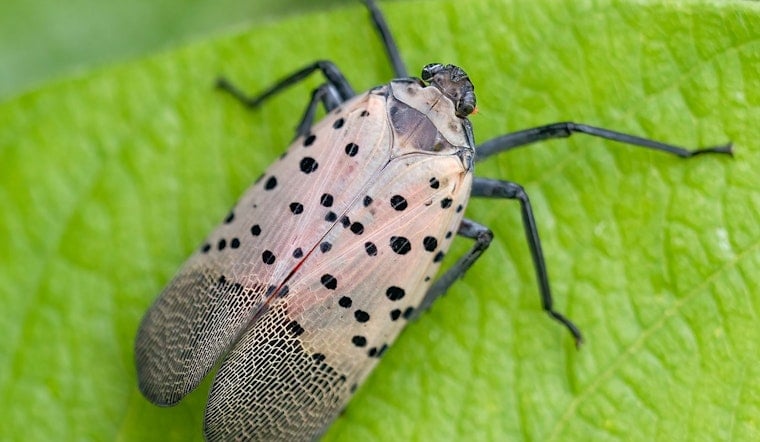
State and local officials say Tennessee is seeing a fresh wave of spotted lanternfly activity this week, with a particularly large cluster reported in Bristol on Monday. The invasive, colorful, sap-sucking insect can stress grapevines, fruit trees and hardwoods, and authorities are urging residents to document and destroy any they find.
Where Sightings Are Popping Up
Reports and state notices show live insects and egg masses have turned up in several counties, including Davidson, Wilson, Sullivan, Sumner, Hamilton and Jefferson, with single reports in Shelby, Williamson, Rutherford, Coffee, Cumberland and Hamblen. As detailed by the Knoxville News Sentinel, the string of sightings stretches across Middle and East Tennessee.
What Officials Want You To Do
The Tennessee Department of Agriculture asks anyone who finds a suspected spotted lanternfly to take a clear photo, note the exact location and submit it via the state’s online "Report a Pest" form, then destroy the insect or egg mass. Those official steps - photograph, report, then destroy - are laid out on the department’s guidance page and press release. Tennessee Department of Agriculture
How To Spot Them And When Adults Show Up
Adults are roughly an inch long and about a half inch wide, with gray-brown forewings marked with black spots and bright red hind wings. Late-instar nymphs and adults are most commonly seen in summer and fall. Federal identification and life-cycle guidance notes that eggs are typically laid in the fall and nymphs emerge in spring, with adults visible from mid-summer into November. USDA APHIS
What Entomologists Recommend
“The best way to control spotted lanternfly outbreaks is to prevent them,” University of Tennessee entomologist Midhula Gireesh said, urging people to scrape and destroy egg masses and inspect vehicles, trailers and outdoor gear before travel. The UT Extension bulletin spells out practical steps, including scraping eggs into soapy water or hand sanitizer and crushing nymphs and adults, and explains why early detection matters. University of Tennessee Extension
Why Farmers And Vineyards Are Watching Closely
Researchers warn that heavy feeding by large groups of lanternflies can weaken vines and trees and produce sticky "honeydew" that encourages sooty mold, which reduces fruit quality and marketability. Federal guidance and extension research note that where spotted lanternfly becomes abundant it can force quarantines, inspections and costly control measures. USDA APHIS
State Response: Detection Dogs, Surveys And Egg Scraping
The Tennessee Department of Agriculture has used targeted surveys, mechanical removal and trained detection dogs in past responses. Two canines nicknamed "Winnie" and "Marcel" were placed to help sniff out egg masses at nurseries, rail yards and other high-risk spots. Local reporting shows those detection dogs and joint inspections have been part of the state’s toolkit as crews remove egg masses and treat heavy congregations. WSMV
If You Find One: Step-By-Step
Take a clear photo, ideally with a size reference, note the location and fill out the state "Report a Pest" form. After documenting, destroy adults by stomping, or crush egg masses into a container with rubbing alcohol, hand sanitizer or soapy water. Check vehicles, campers, firewood and outdoor equipment before moving them between counties to avoid inadvertently spreading eggs or hitchhiking adults. Tennessee Department of Agriculture
Bottom Line
Early reporting still gives Tennessee the best chance to slow this invasive insect’s spread, officials say. If you see something that might be a spotted lanternfly, photograph it, report it and then destroy it. Quick public action can make a real difference for vineyards, nurseries and backyard trees.





.jpg)