

























































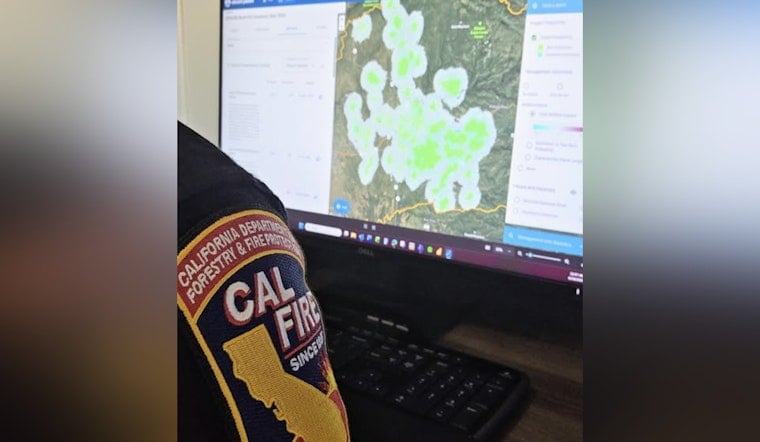
Cal Fire is rolling out a statewide data partnership with Vibrant Planet that is set to shake up how the agency plans and measures wildfire mitigation. Instead of counting success by acres treated, the agency is shifting to an "impact of treatment" metric that zeroes in on projects delivering the greatest risk reduction per dollar. The move builds on pilot work in the Amador‑El Dorado and San Diego units, where officials say a relatively small share of the landscape accounted for a large share of risk‑reduction opportunity. State leaders say the change is designed to steer limited fuels‑reduction dollars, home‑hardening work and other treatments toward places that provide the most protection for communities. The announcement lands as California accelerates funding and planning to get more work on the ground ahead of peak fire season.
How 'impact of treatment' reshapes planning
In a post on CAL FIRE, the department described the new metric as a way to prioritize locations "where fuel reduction treatments offer the highest return on investment for reducing community wildfire risk." Deputy Chief Chris Ramey, who leads CAL FIRE's pre‑fire planning program, wrote that integrating Vibrant Planet analytics with CAL FIRE expertise "lets the department focus efforts where they will have the greatest impact." The post framed the partnership as a way to back hazardous‑fuel decisions with data, science and cooperator engagement, rather than relying solely on tradition or politics.
Pilot results point to big efficiency gains
Vibrant Planet says pilots in the Amador‑El Dorado Unit and the San Diego Unit showed how the platform identifies "Strategic Planning Areas" that concentrate risk‑reduction opportunity. According to Vibrant Planet, those planning areas can make up as little as 5% of a unit's acreage while accounting for more than half of the unit's total opportunity to reduce risk, producing what the company called roughly a 10× efficiency gain for CAL FIRE. In the Amador‑El Dorado pilot, a planned 37,000 acres of targeted treatments were modeled to cut wildfire hazard by 89% across those acres and to avoid an estimated $3.9 billion in losses.
Data-driven push slots into statewide tracking
The shift dovetails with earlier state tools that track not just activity acres but treatment outcomes. California launched an Interagency Treatment Dashboard and a Fuel Treatment Effectiveness Dashboard to monitor how projects perform in actual fires. As outlined by the State Resources Agency, those dashboards let planners and the public see where treatments have helped with containment, access and reduced damage after incidents. Officials say pairing those monitoring systems with decision‑support modeling could tighten the feedback loop between planning, implementation and evaluation.
Caveats: models still need local data and trust
A recent peer‑reviewed analysis of the platform, published in Ecological Modelling, noted that operationalizing risk assessments across large landscapes requires up‑to‑date datasets, clear response functions and a focus on transparency and stakeholder trust. Experts say models can power more strategic investment but must be paired with local knowledge, monitoring and maintenance to avoid misplaced or short‑lived gains. Those checks are especially important when modeling outputs begin to shape grant awards and local priorities.
Timeline and what comes next
Vibrant Planet says statewide deployment will be phased through 2026 with the goal that all 21 CAL FIRE Units and six Contract Counties will use the platform to update their 2027 Unit Fire Plans. Company and agency officials say unit‑level rollouts and trainings will follow so planners and cooperators can generate locally actionable scenarios and monitor outcomes. Both partners said they will publish more details on timing and unit‑specific use as the deployment proceeds.
What it could mean for communities
For residents and local governments, the change means Unit Fire Plans and grant priorities could tilt toward fewer, higher‑impact projects rather than broad acre counts. The state's dashboards and unit planning documents will be the key places to watch for how priorities shift, and county units and CAL FIRE channels will post unit‑level decisions and updates. Officials say the aim is to make investments more defensible, more measurable and more tightly targeted at protecting people, infrastructure and ecosystems.




