

























































Cambridge’s big zoning rewrite is no longer an abstract fight at City Hall. It is now playing out on quiet streets, where demolition crews, architects and lawyers are showing up on blocks that barely saw a building permit for years. Cul-de-sacs that once heard nothing louder than leaf blowers are now bracing for construction noise, landmark petitions and, in some cases, neighbors promising to sue if projects move ahead. Early battles are testing whether the city’s push for more homes can happen without tearing up the neighborhood character that many residents say drew them to Cambridge in the first place.
9 Wyman Road Becomes a Flashpoint
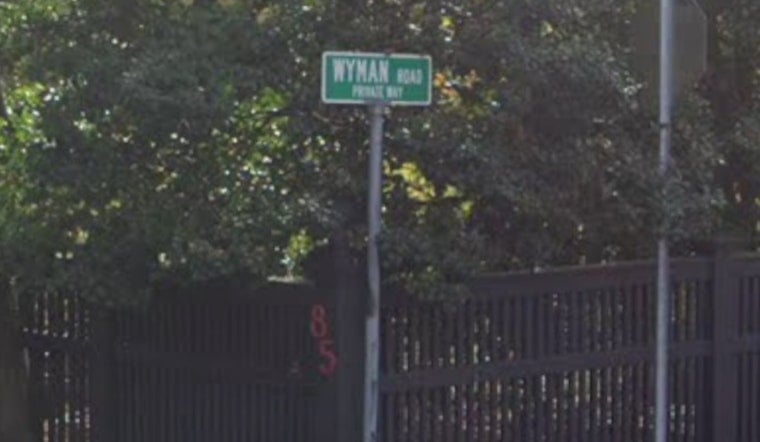
One proposal has become the symbol of that clash. At 9 Wyman Road in Huron Village, a developer wants to put up a six-story, 56-unit building at the end of a small cul-de-sac. Neighbors argue the project is wildly out of scale for the dead-end street and have launched a “Stop 9 Wyman” campaign. They have asked the historical commission to landmark the existing house and have warned they will head to court if a building permit is issued. So far this year, the city has permitted around 400 new homes, and building starts averaged about 350 units a year between 2023 and 2025, down from more than 800 units a year a decade earlier, as reported by The Boston Globe.
How the New Rules Work
The City Council overhauled residential zoning so that multifamily buildings are allowed across most neighborhoods and the old, complicated limits on heights and unit counts are simpler. Under the updated ordinance, most residential lots are now classified as Residence C-1, which allows up to four stories. Six stories are allowed on lots of at least 5,000 square feet if 20 percent of the residential floor area is set aside as permanently affordable, according to the City of Cambridge. City officials say the goal is to spread new housing more evenly across neighborhoods instead of piling it onto a few large development sites.
A Pipeline and a Loophole
A tracker compiled by Councilor Catherine Zusy’s office and analyzed by the Globe identified more than 70 sites with early-stage plans that together could add more than 600 homes, a sign that the zoning reform is already changing what is in the development pipeline, as reported by The Boston Globe. Planners point to a rush of four-story proposals that stack three to nine units on a lot, a setup that often stays below the six-story trigger tied to the affordable-housing requirement. Developers, both large firms and small local players, have multiple projects in the queue, and the Globe noted teardowns that would be replaced with higher-end units.
Preservation Review and the Wyman Petition
Preservation staff are already tangled up in the 9 Wyman dispute. Cambridge Historical Commission staff recorded a petition to study the property for landmark status and in May recommended against an automatic landmark finding, saying a formal decision would come only if a demolition application is filed. The commission’s evaluation also notes a December 2025 staff advisory meeting on a six-story design for the site and concludes that the proposal generally fits the new zoning rules, according to a commission report. Cambridge Historical Commission documents lay out the procedural steps that could slow, alter or potentially block projects like this one.
Western Avenue and a Funeral-Home Fight
Not every flashpoint is tucked on a tiny side street. On Western Avenue, owners and developers want to replace the long-running A.J. Spears Funeral Home with a six-story building of roughly 74 units that would include 20 percent affordable units under the new zoning rules. The Historical Commission found parts of the site historically significant and told the developer to go back and revise its plans, according to local reporting by Cambridge Day. That case is an early example of how preservation review, public hearings and back-and-forth revisions can reshape or slow a project.
Councilors Push Fixes
At City Hall, some councilors are already trying to tweak the ordinance in response to the first wave of proposals. Policy orders on the table would increase setbacks, curb long, uninterrupted exterior walls, adjust off-street parking rules, and steer six-story buildings toward major corridors. Councilors Catherine Zusy and Tim R. Flaherty describe the changes as technical fixes aimed at unintended side effects of the overhaul. Flaherty has warned that Cambridge could turn into a “stopover” if most of the new housing ends up as one-bedroom units, and Zusy told The Harvard Crimson she wants to “make it better” rather than roll the reform back.
Advocates and Critics Square Off
Housing advocates argue that pulling back now would choke off the development pipeline and wipe out both market-rate and inclusionary units. The advocacy group A Better Cambridge has urged residents to oppose amendments it says would erase hundreds of homes and dozens of permanently affordable units already in line. At the same time, some local commentators say projects like 9 Wyman illustrate why the zoning change was needed in the first place, contending that the city can no longer allow exclusionary rules to shield wealthier neighborhoods from new housing, as argued in an editorial in the Somerville Independent.
What happens next will be both procedural and political. Projects will work their way through staff reviews, design overhauls and public hearings while neighbors explore legal options. The next several months will show whether Cambridge can keep construction moving at a faster pace while keeping a lid on the neighborhood fights unleashed by its new zoning rules.





