

























































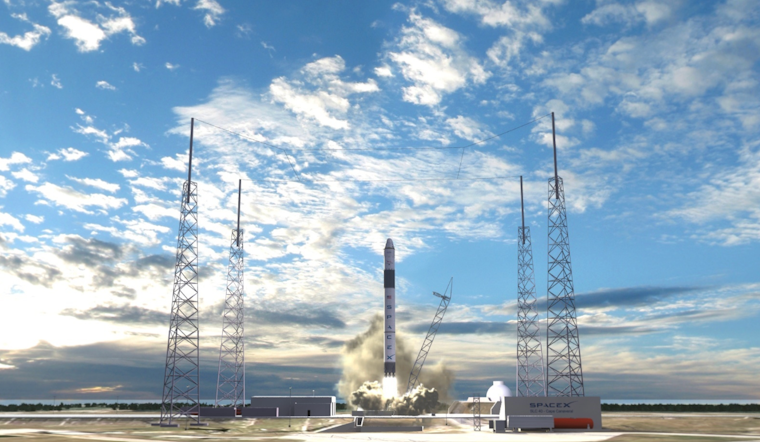
SpaceX is lining up an evening show over Florida's Space Coast, targeting a launch from Cape Canaveral to send Northrop Grumman’s Mission Robotic Vehicle, a two-armed satellite-servicing spacecraft, into a transfer orbit on its way to geostationary orbit. Riding along are three Mission Extension Pods, compact propulsion "jetpacks" the robot can bolt onto customer satellites to squeeze out several more working years.
Launch window and webcast
SpaceLogistics, a Northrop Grumman company, is targeting July 21 with a four-hour launch window opening at 5:15 p.m. ET from Space Launch Complex 40 at Cape Canaveral, with a backup opportunity on July 22, according to Northrop Grumman. SpaceX plans to stream the mission on its official channels, and the partners say a live feed should kick off roughly 15 minutes before liftoff.
The robot's arms
The MRV carries a DARPA-funded robotics payload developed and built by the U.S. Naval Research Laboratory, which says the pair of dexterous arms move through seven degrees of freedom and are designed to capture, manipulate, and service high-value satellites. Northrop integrated that payload onto its MRV bus and purchased the Falcon 9 ride to demonstrate rendezvous, inspection, and installation work in geosynchronous transfer orbit, as reported by Defense News.
How the Mission Extension Pods work
Northrop says the three Mission Extension Pods on this flight are compact propulsion modules that the MRV's hands can bolt onto customer satellites to provide roughly six additional years of station-keeping and maneuvering life, according to Northrop Grumman. The MRV also includes a passive refueling interface and a suite of inspection and repair tools that together could change how operators manage expensive GEO assets.
Space Coast context
The MRV mission highlights just how busy the Space Coast has been this year. Local reporting says the flight would bring the Cape's tally into the high 40s for 2026, with SpaceX responsible for all but seven of those missions so far. The Orlando Sentinel reviewed the payload details and noted the launch has a one-day backup opportunity.
Booster choice and performance trade-offs
Because the MRV and its pods have to reach a high-energy geosynchronous transfer orbit, mission listings indicate SpaceX will fly the Falcon 9 first stage in expendable mode for this flight, and the core slated for MRV would mark its 32nd launch. Next2Space and other trackers list the booster as expendable for the mission and detail its prior flights.
What's next
If launch goes to plan, the MRV will begin months of on-orbit testing that include capturing and installing Mission Extension Pods and demonstrating inspection, relocation, and repair tasks for commercial and government satellites. The work is part of DARPA's Robotic Servicing of Geosynchronous Satellites program, which aims to make on-orbit servicing routine, per DARPA.





