

























































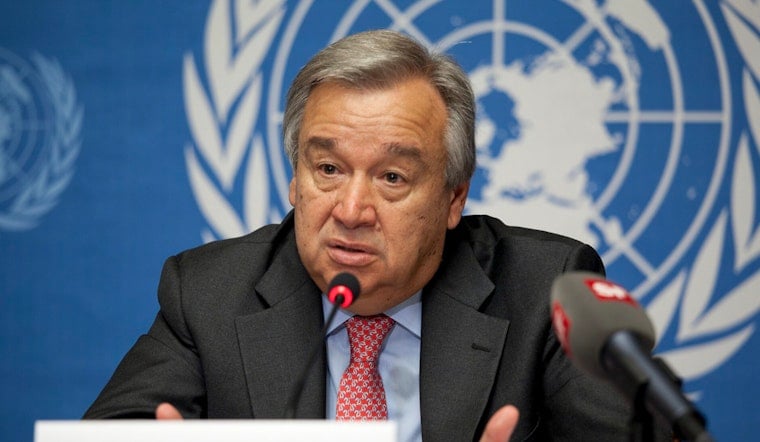
At a tense U.N. pledging meeting in New York on Tuesday, Secretary-General António Guterres warned that the U.N. agency serving Palestinian refugees is “nearing a breaking point” as cash runs low and services shrink. He said the agency’s liquidity crisis is already forcing operational cutbacks that are hitting clinics, schools and food deliveries across Gaza, the West Bank and neighboring host countries, as diplomats and aid ministers huddled at U.N. headquarters for a high-level donor session.
Guterres urged donors to plug an urgent gap
As reported by Reuters, Guterres told delegates that UNRWA is staring at a cash-flow deficit of about $100 million for 2026 and pressed member states to step in with immediate, voluntary support. He framed the appeal as essential not only to keep basic services running but also to head off broader instability in an already volatile region.
Funding math leaves a large shortfall
UNRWA says the crunch follows a years-long financial squeeze. In 2025, the agency mobilized about $887 million in confirmed pledges and ultimately received roughly $829 million in contributions, which covered only about 27% of its $3.3 billion funding requirement, according to UNRWA. That mismatch forced austerity measures and has left the agency operating close to the edge of its remaining cash reserves.
Operations are already shrinking
Guterres told the conference that UNRWA reduced service-delivery hours by roughly 20% in January and is running under strict cash-flow controls to avoid further job losses, according to the United Nations transcript. He also underscored the human cost of delivering services in conflict zones, pointing to the heavy toll recent months have taken on UNRWA staff.
His warning, in his words
“They cannot keep going like this without urgent backing and financial support from Member States,” Guterres said, calling UNRWA “a stabilizing force in an age of instability,” as recorded in the United Nations transcript. His message left little doubt that the agency’s future is directly tied to how quickly donors step up.
Who stands to lose if funding dries up
UNRWA says it provides emergency food and cash assistance to about 2.6 million people and maintains active files for roughly 5.9 million registered Palestine refugees spread across Gaza, the West Bank, Jordan, Lebanon and Syria. Those services, including schooling for hundreds of thousands of children and primary health care that handles millions of clinic visits each year, would face further erosion if fresh pledges fail to materialize.
Politics has complicated a straightforward rescue
The squeeze has been sharpened by political decisions. The United States, long UNRWA’s biggest donor, halted direct aid in January 2024, and other governments have tightened support, sending a chill through the wider donor community, according to Reuters. U.N. spokesman Stéphane Dujarric said the results of the ad hoc meeting would be announced on Wednesday, leaving only a narrow window for governments to fill the gap.
The bottom line at the pledging table is stark: UNRWA’s ability to run schools, clinics and food-distribution centers depends on a politically fragile stream of voluntary donations. With months of operations already squeezed by austerity, Guterres’ plea signaled that if donors do not shore up the agency, millions of civilians will feel the impact first, and neighboring states and local authorities will be left to carry a far heavier load.





