

























































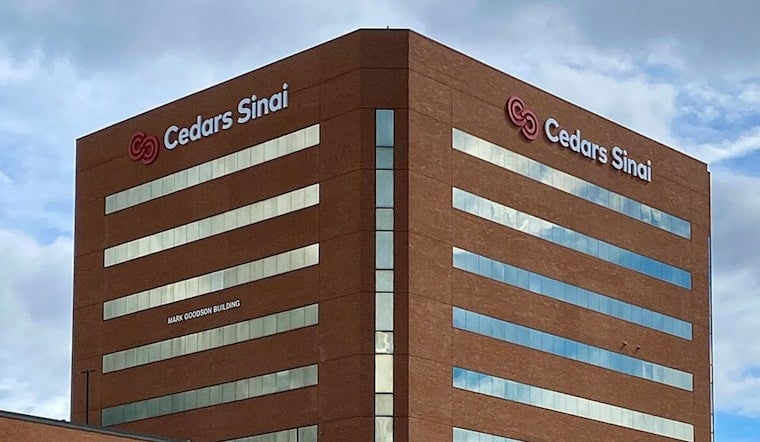
Cedars-Sinai Makes House Call to London’s Harley Street
Cedars‑Sinai is stepping well beyond Beverly Grove, opening a flagship outpatient clinic in London’s Harley Street and pairing that move with referral offices, hospital partnerships and venture units across Europe, Asia and the Middle East. The push mixes patient-facing clinics with investments in health‑tech and joint hospital projects, a strategy leaders say is meant to let Cedars follow patients instead of simply hoping they will fly to Los Angeles. For Angelenos, it is both a prestige play and a signal that the system is building new pipelines for research, clinical talent and revenue that could ultimately flow back to the home campus.
Clinic on Harley Street
The new Cedars‑Sinai Clinic London, which opened in May, sits in the Harley Street medical district and was built out for primary care, executive health and concierge services across multiple floors. According to Cedars‑Sinai, the four‑floor site includes private exam rooms along with on‑site diagnostics such as ultrasound, echocardiography and DEXA scanning to speed decision‑making for patients and clinicians.
Referral offices from Doha to Quito
The London clinic is the most visible step in a program that now includes patient referral offices and partnerships in Doha, Mexico City, Shanghai, Singapore and Quito, among other locations, and that draws patients from more than 100 countries. The Los Angeles Business Journal details the rollout and dates for those referral offices as part of what it describes as a deliberate global expansion by the Beverly Grove‑based health system.
Joint hospitals and training partnerships
Cedars has not limited itself to small clinics. The system is affiliated with larger projects overseas, including The View Hospital in Doha, a private facility developed in partnership with Elegancia Healthcare that opened with roughly 240 beds. The View Hospital’s site and project pages describe the affiliation along with the hospital’s capacity and services. Cedars also helped develop the Shenzhen Qianhai Taikang Hospital in China as part of a multi‑year collaboration on clinical programs and operational training.
Investing in health tech abroad
On the investment side, Cedars’ innovation arm has set up Coronet Ventures units to back startups, first in Singapore through a co‑investment partnership announced with Enterprise Singapore in 2023 and later with a European base in Rotterdam established in 2025. The Singapore co‑investment arrangement and the Rotterdam launch underscore a strategy that connects clinical partnerships with venture capital ties. In January 2025 Cedars and Oxford Science Enterprises took a first co‑investment step together, putting about $2 million into a neurology‑care startup as part of a broader U.K.‑U.S. innovation tie‑up.
What it means for Los Angeles
Cedars executives frame the program as continuity‑of‑care for globally mobile patients and as a way to accelerate clinical innovation that benefits the home campus. Heitham Hassoun, who runs Cedars‑Sinai International, described the approach on a Becker’s Healthcare podcast as building “the modern railroad for healthcare,” with clinics, referral centers and training programs linking local care with Los Angeles expertise. Closer to home, the system has also been busy on real‑estate and campus fronts, and moves such as the Beverly Connection purchase signal that Cedars is reinvesting locally even as it grows abroad.
Local readers’ takeaway
For Angelenos, the takeaway is twofold: patients will have new options for coordinated care when traveling, and the system’s overseas investments could bring research collaborations, talent flows and funding back to Los Angeles. As Cedars continues to roll out clinics and co‑investments, the balance between local obligations and global ambitions will remain a key watch‑point for civic leaders, clinicians and patients alike.





