

























































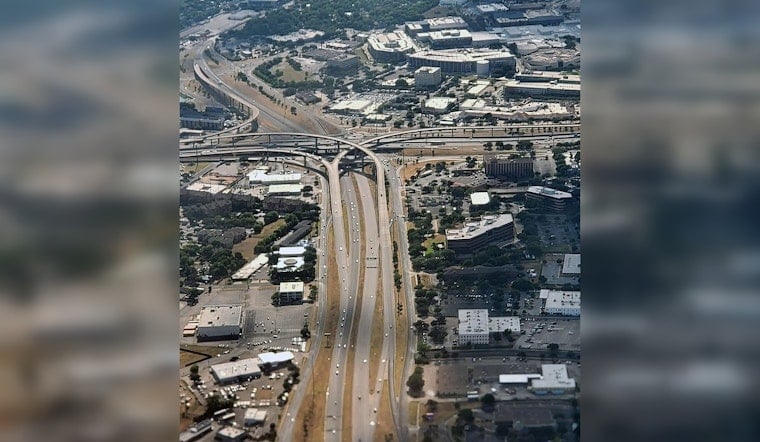
Roughly $400 million in transportation cash is still quietly steering what gets built across Central Texas. Regional planners carved up that not-exactly-pocket-change for the 2019-22 funding cycle, sending money to highways, local arterials and a short list of bike and pedestrian upgrades. The Capital Area Metropolitan Planning Organization, or CAMPO, locked in the project slate in spring 2018 after a winter call for ideas from cities, counties and agencies across its six-county territory. Those choices continue to echo today in construction plans on corridors like I‑35 and a web of suburban connectors.
According to Community Impact, CAMPO opened that call for projects on Dec. 11, 2017, and closed it on Jan. 18, 2018, inviting applicants from Bastrop, Burnet, Caldwell, Hays, Travis and Williamson counties. Community Impact reported that the roughly $400 million pot combined federal and state dollars with revenue from voter-approved Propositions 1 and 7 that CAMPO planned to program into its 2019-22 Transportation Improvement Program, or TIP. Public comment ran in April 2018, and the Transportation Policy Board voted in May to adopt the recommended list.
Which projects got money
As laid out in the 2019-22 TIP from CAMPO, the adopted package blended big highway work with more modest multimodal pieces. Projects named during the call and carried into the TIP included segments of I‑35 and SH‑29 in Georgetown, improvements along RM‑620 and RM‑1431, new sidewalks on North Lamar Boulevard, bicycle striping and a walking trail in Rollingwood, plus continued funding for the HERO highway-response program. The TIP spells out how much money each project received, when various phases are scheduled and how the scoring system ranked competing proposals.
Why it matters now
Those allocations still matter because earlier programming decisions help determine which corridors get widened or rebuilt in later funding rounds. Previous CAMPO votes to funnel money into I‑35 components have resurfaced in subsequent policy fights, as reported by the Austin Monitor. As project costs shift and amendment cycles roll on, CAMPO has had to revisit how money is distributed, and the 2019-22 slate goes a long way toward explaining why some neighborhoods ended up with major capital projects while others saw smaller active-transportation upgrades. In effect, that $400 million round was a region-wide programming decision that still shapes today’s planning tradeoffs.
How projects were scored
CAMPO staff scored proposals on performance, looking at congestion and mobility impacts, regional benefits and safety, along with a cost-benefit analysis and how ready each project was to move, according to Community Impact. The policy board adjusted that framework to add a travel-demand-management category so efforts like carpool programs and flexible work schedules could compete for the funds that the city of Austin had pushed to see on the table. Anthony Gonzales, CAMPO’s outreach planner, said the goal was to “pick the best projects” and build a portfolio that provided value across the region.
Public input and next steps
CAMPO ran a series of open houses in April 2018 and accepted written comments before the board’s May vote, according to outreach materials from CAMPO. The agency treats the TIP as a living document that gets updated and amended as project estimates and priorities shift, so some of the 2019-22 allocations have since been revisited. Residents who want the line-by-line breakdown and amendment packets can dig into the adopted tables and supporting files on CAMPO’s project pages.
Whether the money actually eased congestion or just played traffic musical chairs remains an open question across jurisdictions, but the 2019-22 allocations are still a key reference point as officials weigh road widening against demand-management strategies today. For readers who want the raw spreadsheets and scoring details, the adopted TIP from CAMPO and coverage by Community Impact contain the documentation behind the decisions.



