

























































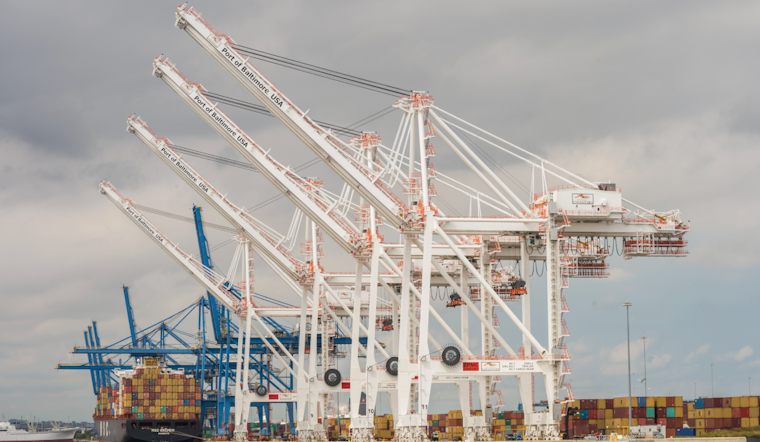
A Chinese‑flagged asphalt tanker operated by COSCO quietly steamed up the Patapsco and unloaded a cargo of asphalt at the Port of Baltimore on Tuesday, and it did not arrive alone. It brought with it a fresh wave of anger over the Trump administration’s emergency Jones Act waiver. The sight of a Chinese‑owned, Chinese‑crewed vessel hauling cargo between U.S. ports has become a rallying point for unions, local officials and national‑security hawks, even as port leaders insist the visit was squarely within the rules of the current waiver.
The ship, the Jin Zhou Wan, is a 146‑meter (about 479‑foot) asphalt and bitumen tanker built in 2017 and run by COSCO Shipping Asphalt Hainan. It sailed in from New Jersey and was photographed alongside a Baltimore berth while discharging its load, according to The Baltimore Banner. Vessel‑tracking data lists the tanker’s specifications and recent coastwise stops in the United States, including an earlier run to Connecticut, per VesselFinder.
How the waiver works
The emergency exception at the heart of the fight was issued in mid‑March 2026 under the authority of 46 U.S.C. § 501. It covers a wide range of commodity categories, including asphalt, that officials said were needed to respond to wartime supply disruptions, according to the U.S. Maritime Administration. MARAD publishes voyage reports for ships operating under the waiver, and a Congressional Research Service overview details the waiver’s rollout and later extensions. Those public filings have become key evidence for critics who argue the program has drifted far from its original, short‑term emergency purpose.
Why mariners are furious
For many domestic unions and U.S. mariners, the Jin Zhou Wan’s Baltimore stop is Exhibit A for how the waiver is shifting everyday coastwise work to foreign operators. “It’s such a hit,” James Bast, a port agent for the Seafarers International Union in Baltimore, told The Baltimore Banner, adding that the Jones Act is really the backbone of the U.S. maritime industry.
The American Maritime Partnership has pressed the administration to scrap the waiver altogether, pointing to MARAD records that show a notable number of waiver voyages by ships with ties to China in a recent statement from the group. American Maritime Partnership
Policy divides widen
Supporters of looser coastwise rules counter that the waiver is doing exactly what it was meant to do by freeing up foreign tonnage to keep cargo moving in a tight market. Economists and policy analysts at the Cato Institute argue that relaxing Jones Act limits can reduce costs and give shippers more flexibility, a theme that runs through the think tank’s tracking of the waiver. Cato Institute
At the same time, maritime reporting has tallied more than one hundred domestic voyages completed under the waiver and noted that several involved vessels linked to Chinese owners, a statistic that sharpens both national‑security and jobs concerns. gCaptain
Legal implications
The waiver mechanism itself is written into 46 U.S.C. § 501 and, under MARAD guidance, requires vessels that receive an exemption to report their voyages and explain how each trip served national‑defense interests. MARAD and a Congressional Research Service review describe the waiver’s original 60‑day term and its later extension, and lawmakers have begun firing off oversight letters seeking MARAD’s voyage files.
For legal and political critics, those documents are likely to be front‑and‑center in any push to narrow the exemption or clamp down on which commodities qualify. In Baltimore, the image of a Chinese-flagged asphalt tanker tied up at a Maryland dock has turned what looked like a technical shipping rule into a very public fight over jobs, security and who gets to carry America’s cargo.





