

























































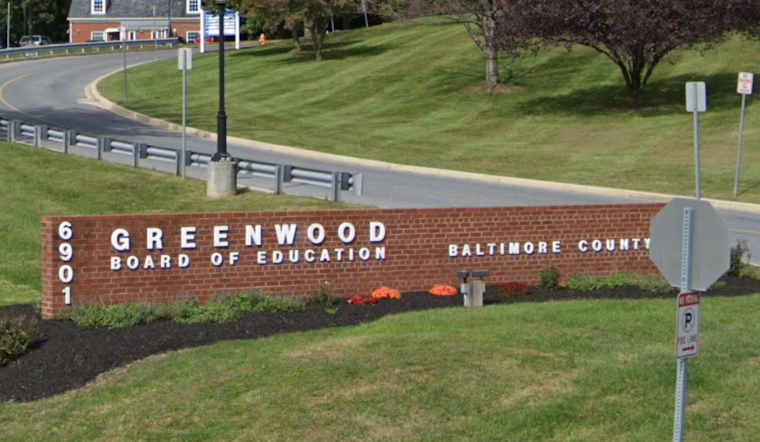
Frustrated by hours of daily screen time, Baltimore County parents are pushing their school system to scale back classroom laptops for the youngest students, arguing the devices are hurting focus and grades rather than helping them. The push comes as Baltimore County Public Schools' policy committee works on new laptop-use guidelines for a district that opened last school year with more than 110,000 students. Parents like Amanda Garratt have asked the school board to eliminate Chromebooks for kindergarten through second grade, while James Frank pulled his sixth-grade son's laptop browsing history and said what he found convinced him something needed to change.
According to the Baltimore Banner, Garratt helped form a local chapter of Schools Beyond Screens and asked school board members how children are supposed to develop focus, perseverance and deep thinking in an environment already competing for their attention. Her third-grade son, she said, had started rushing through math problems just to earn time playing Prodigy, an educational game the district uses as a reward for finishing work early. Garratt is asking the board to prioritize paper-based, teacher-led instruction over device-driven lessons for young learners.
A Father's Browser History Raises Red Flags
Frank's request for his son's school-issued browser history, per the Banner, showed hours spent playing games, searching for homework answers, watching YouTube videos and toggling through Google Docs rather than doing coursework. He said his sixth-grader brought home hardly any paper all year, and that his grades sank significantly once he received a school laptop. Frank argues young students lack the frontal-lobe development to manage screen time on their own, though he stops short of calling for a total ban on classroom devices, saying middle schoolers may simply not be ready for unrestricted internet access.
The Case For and Against an AI Reading Tutor
At Westowne Elementary, kindergarteners have used the AI reading program Amira for 12-minute laptop lessons, one of many examples fueling parent skepticism about early screen exposure. District officials maintain the tool has boosted English scores, pointing to state data showing high-usage students averaged 11.1 percentile growth during the 2023-2024 school year compared with 4.4 percentiles for those below usage targets, according to Baltimore County Public Schools. Manjul Holmes, who opted her rising first-grader out of Amira, told the school board the program primes the youngest learners to need screens, and said she and her husband read to their daughter at home instead; her daughter told her the school even gives out a trophy to whichever student uses Amira the most.
Maryland Reads has pushed back on the district's data, warning in late 2024 that increased screen reliance in early grades can undercut children's reading development rather than build it, as noted by K-12 Dive. A Stanford University-led study found in 2024 that some ed-tech can effectively support elementary reading skills, but also found that pop-up questions and clickable definitions embedded in reading software do not actually help comprehension. Rebecca Silverman has advised districts to scrutinize any program by asking whether it follows effective-practice principles and has strong independent research behind it before adopting it broadly.
State Law Piles On as BCPS Retreats From 1-to-1 Laptops
The parent campaign lands as Maryland lawmakers have already moved on student devices statewide. The Joanne C. Benson Maryland Phone-Free Schools Act, signed into law this past May, requires every local school board to adopt policies by the 2027-2028 school year barring personal phone use during the school day and restricting social media access, according to CBS Baltimore. The law still allows district-issued devices for instructional purposes, leaving enforcement details up to individual school boards, including Baltimore County's; statewide cellphone-use restrictions are set to take effect in fall 2027, per the Banner.
Baltimore County had already begun retreating from its old 1-to-1 laptop model before this pushback intensified. Ahead of the 2025-2026 school year, the district capped school-issued Chromebook allocations at 61% of enrollment for elementary schools, required devices to stay at school, and eliminated individual take-home laptops for elementary and middle schoolers, according to a district memo obtained by WOLB Baltimore. That marks a reversal from 2014, when Baltimore County Public Schools put a laptop in every student's hands under its $200 million-plus Students and Teachers Accessing Tomorrow initiative, launched by then-Superintendent Dallas Dance, who later pleaded guilty to perjury in 2018 for failing to disclose payments from an ed-tech vendor, as reported by Education Week.
Baltimore City and a Growing National Movement
Baltimore County isn't alone in reconsidering how much of the school day belongs to a screen. Baltimore City Public Schools rolled out new PreK-through-2nd-grade guidelines for the 2026-2027 school year that eliminate 1:1 personal devices for early learners, cap daily classroom tech bursts at 15 to 20 minutes, and restrict student YouTube access districtwide starting July 1 — steps Hoodline detailed in Baltimore City's own device crackdown. Los Angeles schools have gone further, banning screen time outright for students in early education, kindergarten and first grade, according to the Banner. Garratt's group belongs to Schools Beyond Screens, a coalition that began with parent organizers in Los Angeles and has since expanded to chapters in more than 30 states and Washington, D.C., per Schools Beyond Screens.
Parents in Baltimore City and Howard County are organizing similar campaigns, per the same reporting. Betsy Tao, who leads Maryland's Distraction Free Schools, said her group has already started talking to state legislators about a bill addressing classroom laptops next year, and that every lawmaker the group met with indicated support for sponsoring it. Bill Heiser, describing a summer program where students used a device for a set time before switching to small-group and independent work, said the district's policy committee will gather input from many people before releasing new guidelines, and that screen usage should be balanced rather than eliminated outright.
Filling the Connectivity Gap
To offset the loss of take-home laptops, the Baltimore County Public Library has stepped in with a device-lending program that lets adult county residents with library cards borrow 5G hotspots and Chromebooks pre-configured so BCPS students can log in with their school credentials, according to the Baltimore County Public Library. Cardholders in good standing can borrow the equipment for up to six months, addressing concerns that low-income families depend on school-issued devices for home internet access. Under separate state child care rules, Maryland already caps passive screen time at 30 minutes a week for children 2 and older in licensed early-childhood programs, with none allowed for kids under 2, according to the Maryland State Child Care Association — a stricter standard than what plays out once children reach public school laptops.
Any changes BCPS adopts will apply across a sprawling system — the district opened last school year with more than 110,000 students in 174 schools and centers, backed by an annual budget topping $1.7 billion, according to Baltimore County Public Schools. For now, the policy committee has not set a timeline for finalizing new laptop guidelines beyond promising to weigh parent, teacher, and administrator input before deciding, per the Banner.





