

























































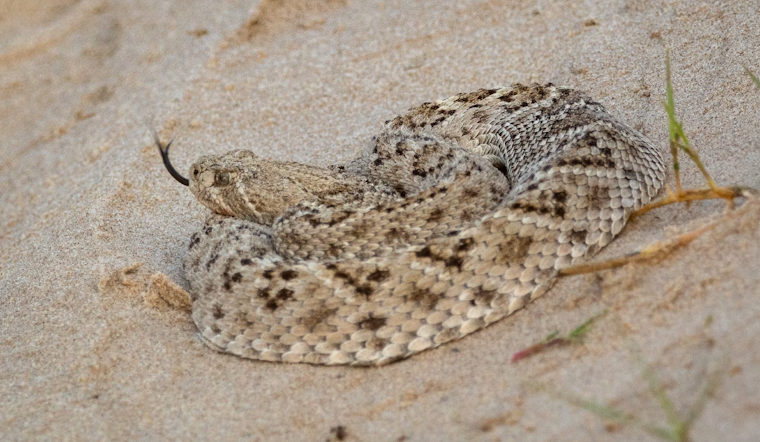
A weekend training run in the Claremont Hills Wilderness Park turned into a fight for survival when a college pitcher was bitten by a rattlesnake and had to be airlifted out after his condition rapidly worsened. He was rushed to the ICU at Pomona Valley Trauma Center, then transferred to a second hospital for more care, ultimately receiving a staggering 34 doses of antivenom. A family friend who is a nurse happened to be nearby on the trail and helped stabilize him until rescuers arrived. Nearly a week later he is moving with crutches, and the close call has sparked fresh warnings for anyone who hits Southern California's popular hillside trails.
Speaking with CBS Los Angeles, the pitcher recalled being overwhelmed by sudden, intense pain after the bite as he rounded a bend. “I was just in agonizing pain,” he said, describing how quickly the situation escalated. According to CBS, he received 20 doses of antivenom at Pomona Valley Trauma Center before being flown to a second hospital, where doctors administered 14 more. Dr. Gabriel Campion with Dignity Health Northridge told the outlet that total was “on the high end.” The athlete used the interview to urge fellow trail users to stay sharp near rocks and brush where snakes can blend in a little too well.
How antivenom dosing works
Antivenom dosing is not one-size-fits-all. Clinicians tailor treatment to what they see in front of them, including symptoms, lab results and whether the venom has triggered coagulopathy or signs of neurotoxicity. The Cleveland Clinic notes that severe crotaline snakebites can require multiple vials and repeat doses until the systemic effects are brought under control. Specialists consistently stress that getting a bite victim to a hospital with antivenom on hand is the most important step, and that field tricks like cutting the wound or trying to suck out venom are not recommended.
Local athlete and recovery
The pitcher appears on the Citrus College baseball roster as a right-handed arm, with recent stats listed on the team site. His profile is posted on the Citrus College athletics page. His family and teammates told CBS Los Angeles they are deeply grateful to the hospital teams and to the hiker who jumped in to help immediately after the bite. After days in the ICU, he is now using crutches and is expected to follow a physical therapy plan before he eases back into throwing.
Trail safety and what to do
The City of Claremont details access, parking and hours for the Claremont Hills Wilderness Park on its official pages. The City of Claremont also reminds visitors to stick to visible paths and keep pets leashed, both for their safety and the wildlife’s. When it comes to first aid after a rattlesnake bite, UCI Health advises against cutting the skin, using suction devices or applying tourniquets. Instead, they recommend getting the victim to a hospital as quickly as possible so clinicians can evaluate them for antivenom. Hikers are urged to carry a phone, listen for rattling sounds and give any snake they see plenty of space.
The pitcher’s ordeal is a blunt reminder that even a familiar, heavily used trail can turn dangerous in a matter of seconds. As he focuses on his recovery, he is hoping his experience pushes other runners and hikers to take extra precautions. Community members say they plan to post more reminders at local trailheads so visitors know what to watch for when the weather is nice and the snakes are out.





