

























































Colorado’s latest Greenhouse Gas Pollution Reduction update comes with a blunt reality check: the state is not on track to hit its near‑term climate law benchmarks on time, even as it pours millions into cleaner buses, trucks, and chargers.
The eighth progress report, covering July 1, 2025, through June 30, 2026, shows modest cuts in greenhouse gas emissions but confirms the 2025 statutory target – a 26% reduction from 2005 levels – is now expected to land later than planned. State modeling also now pushes full delivery of the 2030 emissions‑reduction goal into the early 2030s.
Where the gains came from
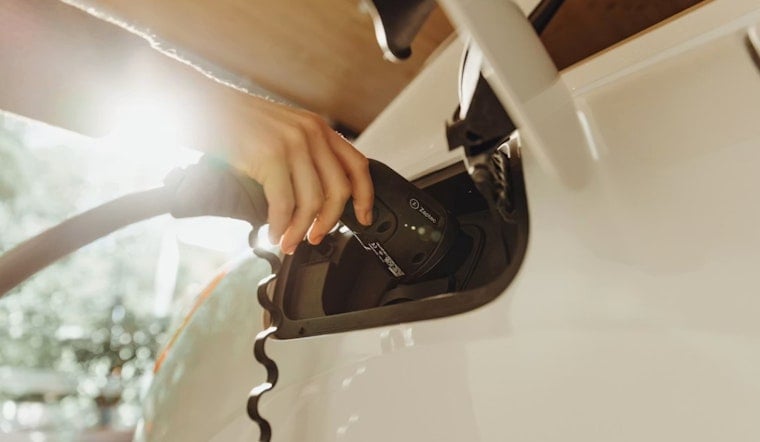
State officials highlight a wave of targeted funding as the backbone of recent progress. According to the state report, the Clean Transit Enterprise Board approved roughly $30 million in capital grants to buy 17 zero‑emission transit vehicles. A separate $5 million award is set to bankroll 56 new fast‑charging ports at nine sites, working out to about $90,000 per port.
On top of that, the Colorado Department of Public Health & Environment says its Clean Fleet Vehicle and Technology Grant Program will support about $15.2 million for 109 low‑ or zero‑emission fleet vehicles across 13 counties. The idea is to chip away at tailpipe pollution while putting cleaner transit and charging where riders and fleets actually are, not just where planners wish they were.
EVs: Ambitious goals, slower uptake
Gov. Jared Polis set a headline‑grabbing goal of 900,000 electric vehicles on Colorado roads by 2030. Reality is trailing the rhetoric. Registrations currently sit at roughly 210,000, and growth cooled after federal subsidy cuts took some of the shine off EV sticker prices.
As reported by The Denver Gazette, the administration has responded by juicing state rebates and grants in hopes of keeping EV adoption from stalling out entirely.
Costs, critics and grid reliability
None of this spending happens in a vacuum. Critics argue the transition is saddling Coloradans with steep up‑front costs and new headaches for the power grid.
A Common Sense Institute analysis cited in the Colorado Springs Gazette estimates that environmental and emissions policies shaved $18.3 billion off Colorado’s GDP and $13.8 billion from personal income between 2009 and 2023. In the background, national reliability work flags rising forced‑outage trends and regional grid stresses just as states like Colorado plug in more vehicles, buildings, and buses.
State officials push back, saying careful planning, targeted grants, and updated building codes can keep the lights on while avoiding even higher costs in the long run. Their argument in short: pay more now, or pay a lot more later.
What it means at the kitchen table
For regular households, the debate shows up in something far less abstract than a modeling chart: utility bills. Public Utilities Commission filings and the state inventory indicate that electricity and natural‑gas delivery charges have climbed since 2019. Critics say those higher delivery costs can eat into the near‑term savings that people are promised from heat pumps and EVs.
At the same time, a model low-energy and carbon building code that became Colorado’s minimum this year tilts firmly toward electric heat pumps over natural gas. State officials, including Colorado Energy Office Executive Director Will Toor, argue that cutting the root causes of climate change also delivers immediate health co‑benefits for Coloradans, from cleaner air to fewer pollution‑related illnesses.
What’s next
The report projects that Colorado will reach the full 2030 emissions‑reduction target by the end of 2032 if all currently committed actions are actually implemented. That “if” leaves plenty of heavy lifting for lawmakers, regulators, and utilities over the next several years.
Key storylines to watch: whether EV registrations reaccelerate, how future grant rounds for buses and chargers are structured, what shows up in new PUC filings, and how the next emissions inventories track the state’s progress. Expect an ongoing tug‑of‑war over costs, grid reliability, and front‑range air quality as the next legislative session approaches.
For more details, read the state report and coverage linked below: according to the state report, the state highlighted funding for transit, fleets, and chargers; the Clean Fleet awards are detailed by the Colorado Department of Public Health & Environment; critics' cost estimates appeared in the Colorado Springs Gazette; and reliability concerns are discussed by NERC in its 2025 Long‑Term Reliability Assessment.





