

























































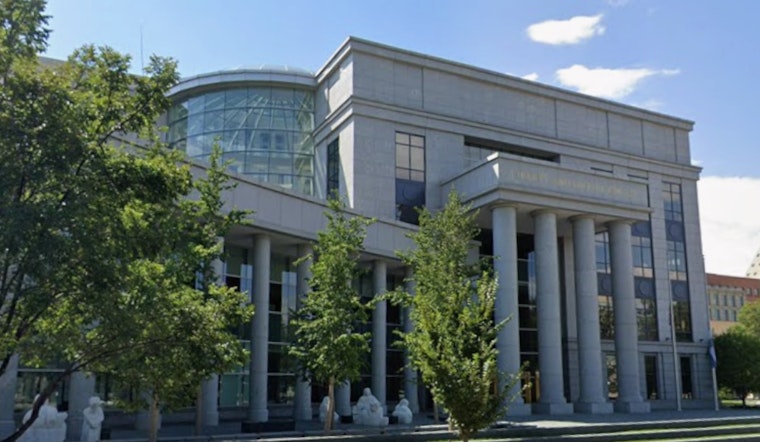
The Colorado Supreme Court has handed a major win to Unite for Colorado, ruling that the conservative political nonprofit that poured about $4 million into 2020 ballot measures does not have to reveal who bankrolled the effort. The justices concluded that because that ballot spending made up only about 23% of Unite's roughly $17 million in overall 2020 activity, the group did not cross the legal line into having a “major purpose” of ballot advocacy.
What The High Court Actually Said
Chief Justice Monica M. Márquez, writing for the court in an opinion available from the Colorado Judicial Branch, summed it up plainly: “Unite did not have a major purpose of ballot issue advocacy during the 2020 election cycle.”
The court treated the “major purpose” question as a fact-specific inquiry. Several data points pointed toward ballot advocacy, but the justices said the relatively small share of Unite's overall spending that went to ballot issues weighed heavily against classifying the organization as an issue committee that would have to open its donor rolls.
A Long Legal Path To Secrecy
The fight began after the Department of State's deputy ordered Unite to register as an issue committee, pay a $40,000 fine, and disclose its 2020 donors and expenditures. Unite challenged that order in court, and Denver District Court Judge David H. Goldberg later sided with the group and tossed the agency's directive, as reported by The Colorado Sun.
A three-judge panel of the Colorado Court of Appeals then revived the deputy's decision and put the disclosure obligations back on the table. The panel's reasoning is laid out in a published opinion available on FindLaw. The state Supreme Court ultimately took the case and reversed course again, ending the long-running tug-of-war over Unite's 2020 donor list, at least for this election cycle.
Why The Percentages Ruled The Day
Lawmakers tried to clean up the fuzzy “major purpose” standard in 2022 with Senate Bill 22-237. The law created hard numerical triggers, including a benchmark where ballot-related expenditures over three years that exceed 30% of an organization's total spending would generally require issue-committee reporting. The bill text is available on the Colorado General Assembly's website.
Had that numeric rule applied to Unite's 2020 receipts, its roughly 23% share of spending tied to ballot initiatives would not have hit the 30% cutoff. The Supreme Court flagged that point but stressed that SB 22-237 does not apply retroactively to Unite's 2020 activity. The justices said they therefore could not base their ruling directly on the new statute and instead relied on the pre-2022 “major purpose” test under which the case actually arose.
Officials And Critics Weigh In
At oral argument, state attorneys warned that letting Unite keep its donors secret leaves voters in the dark about who fueled a multimillion-dollar push on statewide issues. “It has been five years since these millions of dollars of advocacy were run, and voters still have no idea who funded it,” one government lawyer argued, according to Colorado Politics.
Some justices, during questioning, also raised the concern that extremely well-funded organizations could sidestep disclosure laws simply by making ballot campaigns a relatively small slice of a very large overall budget. That tension sat at the heart of the case: how to police dark money without sweeping in groups whose main work is not ballot advocacy.
What This Means For Future Elections
Transparency advocates say the ruling shows why legislators and regulators have spent years trying to draw a sharper line between ordinary nonprofit activity and coordinated ballot campaigning. Observers told The Colorado Sun that bright-line thresholds like those in SB 22-237 can give groups clearer guidance about when they must disclose, even if they do not resolve every edge case.
Defenders of donor privacy counter that forced disclosure can chill the right to associate, especially for contributors backing controversial causes. With Unite off the hook for 2020, lawmakers are likely to revisit whether SB 22-237's numerical approach gets the balance right between transparency for voters and privacy for donors.
The decision in Unite for Colorado v. Colorado Department of State (No. 24SC281) now stands as the Colorado Supreme Court's most detailed word on the “major purpose” test. For the moment, it also means the state's strongest legal tool for prying open Unite's 2020 donor list has fallen short.





